

Our Solution
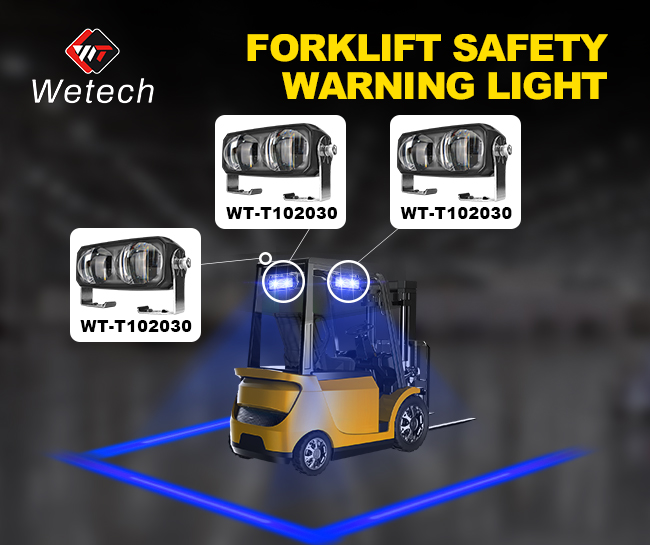
Forklifts are essential in warehouses, construction sites, and industrial settings, but they also pose significant risks to pedestrians and nearby workers. To reduce accidents and improve situational awareness, the WT-T102030 Forklift Safety Warning Light provides a highly effective solution. Designed for durability and high visibility, the WT-T102030 projects a bright, clear warning signal onto the floor, alerting people in the vicinity of an approaching or operating forklift. This visual cue helps prevent collisions, especially in blind spots, noisy environments, or areas with limited lighting. The model number WT-T102030, repeated across the device label, emphasizes a reliable, standardized safety tool that can be easily integrated into most forklifts. By using LED technology, the light ensures low power consumption, long life, and consistent brightness — even in dusty or damp conditions. Implementing warning lights like the WT-T102030 is a proactive step toward building a stronger safety culture. It not only protects foot traffic near forklift routes but also reminds operators to stay alert. In modern material handling, clear visual warnings are just as critical as horns and backup alarms.
View More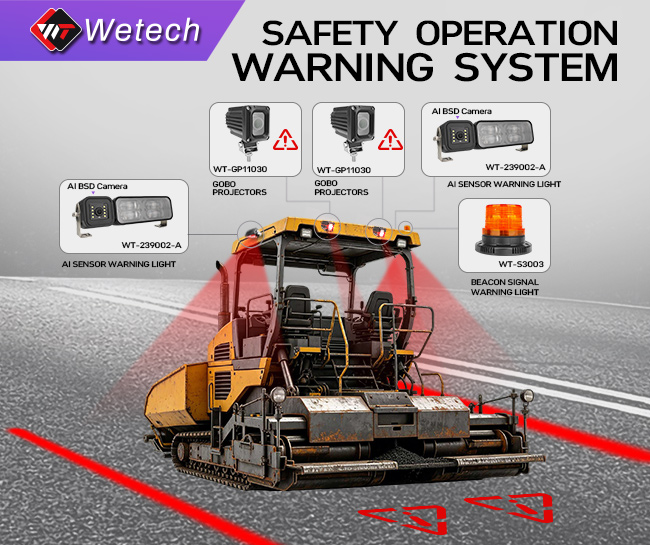
With Wetech’s Safety Operation Warning System, asphalt paver operations shift from reactive safety measures to proactive hazard prevention. Protect your crew, safeguard your equipment, and meet the highest site safety standards—all while keeping paving projects on track, every single day. Construction sites, especially road paving zones, demand the highest level of safety for operators, ground crews, and equipment. Wetech’s Safety Operation Warning System is purpose-built for asphalt pavers, combining AI-powered detection, high-visibility projection, and multi-mode alerts to eliminate blind spots, prevent collisions, and create a secure work environment—even in low-light, high-noise, or chaotic conditions. Core System Components & Application Benefits ✅ AI BSD Camera (WT-239002-A) with Integrated Warning Light Mounted at key vantage points on the paver, the AI-powered Blind Spot Detection (BSD) camera continuously monitors hard-to-see zones. It instantly identifies personnel, obstacles, or nearby equipment, triggering visual and audible alerts to the operator before a hazard escalates. The built-in warning light adds an extra layer of visibility for ground crews, ensuring no one is caught in the paver’s path. ✅ GOBO Projectors (WT-GP11030) These high-brightness projectors cast vivid red safety boundaries and warning symbols directly onto the ground around the paver. The projected lines mark the machine’s operating perimeter and blind-spot zones, acting as a clear, instant visual cue for workers to stay clear—even in bright sunlight or dusty conditions. ✅ Beacon Signal Warning Light (WT-S3003) The high-intensity amber beacon provides a 360° visual alert, signaling the paver’s movement and operation status to nearby workers, vehicles, and other equipment. Its bright, flashing light ensures the machine is visible from hundreds of feet away, reducing the risk of accidental encroachment. Why This System Transforms Paver Safety AI-Powered Precision: No more relying solely on operator awareness—the BSD camera detects hazards automatically, cutting through human error. Layered Alert System: Visual (projected lines, beacons, warning lights) + AI-driven alerts work together to reach operators and crew members simultaneously. Durable for Construction: All components are built to withstand the vibration, dust, moisture, and extreme temperatures of road construction sites, delivering reliable performance shift after shift. Zero Disruption to Workflow: The system integrates seamlessly with the paver, adding no operational complexity while drastically reducing accident risks.
View More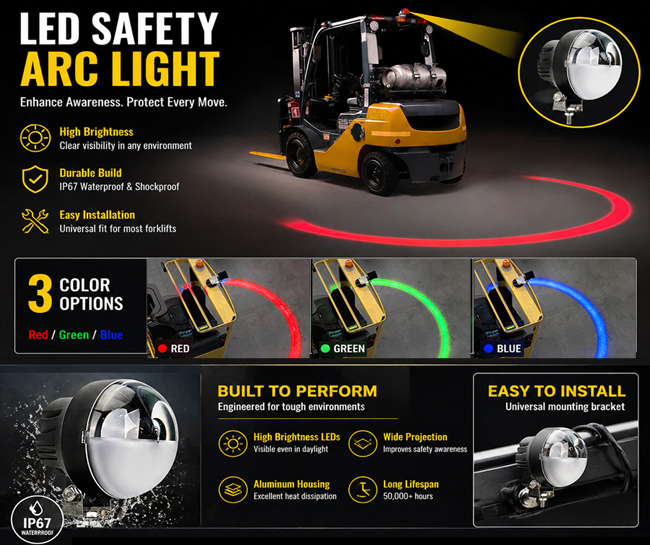
Forklift LED Safety Arc Light: Your Ultimate Warehouse Safety SolutionElevate On-Site Forklift Safety & Prevent AccidentsWorkplace collisions and pedestrian accidents are one of the biggest hidden hazards in busy warehouses, distribution centers, loading docks, and industrial facilities. Our high-performance LED Safety Arc Light is purpose-built to eliminate blind spots, define clear danger zones around moving forklifts, and drastically boost situational awareness for operators and on-foot personnel alike.Designed to project a bright, distinct arc line on the ground around your forklift’s perimeter, this safety warning light creates a highly visible safe buffer zone that alerts pedestrians, nearby equipment, and staff to keep a safe distance — even in low-light, high-traffic, or harsh working conditions. Core Product Advantages & Key Features Ultra-High Brightness, Unmatched VisibilityEquipped with premium high-intensity LED chips, our arc light delivers outstanding clarity and visibility that remains perfectly sharp even under bright daylight, dusty warehouses, or dim nighttime environments. No more missed warnings, no more unclear safety boundaries. Heavy-Duty Industrial DurabilityBuilt for the toughest industrial worksites:• IP67 waterproof & dustproof rating• Professional shock and vibration resistance to withstand constant forklift movement, bumps, and rough terrain• Premium aluminum alloy housing for superior heat dissipation, ensuring long-lasting stable operation 3 Custom Color Options For All ScenariosChoose from Red / Green / Blue arc beams to match your site’s safety marking rules:• Red: High-risk warning perimeter• Green: Safe passage guidance zone• Blue: Special equipment dedicated warning area Wide Projection & Enhanced Safety AwarenessThe wide-angle arc projection clearly marks the forklift’s operating radius, instantly reminding pedestrians and surrounding workers to maintain a safe clearance. Effectively reduces side collisions, corner impacts, and reversing accidents to protect your team and valuable assets. Effortless, Universal InstallationComes with an adjustable universal mounting bracket, this light fits nearly all forklift models, overhead cranes, and industrial vehicles. No complex wiring or modification required — fast setup, ready to use in minutes. Long Service Lifespan & Low MaintenanceBoasts an ultra-long 50,000+ hours LED lifespan, low power consumption, and zero frequent replacement hassle. Deliver consistent reliable safety performance year after year, lowering your long-term operational and maintenance costs. Why Choose Our LED Safety Arc Light?• Reduce forklift-related workplace accidents by over 80%• Comply with global industrial workplace safety regulations• Protect your operators, pedestrians, inventory, and machinery• Work reliably indoors and outdoors, rain or shine• One-time simple installation, permanent upgraded site safety Ideal Application Scenarios• Warehouses & logistics distribution centers• Manufacturing factories & production plants• Loading docks, ports & freight yards• Retail stockrooms & large storage facilities• Construction sites & heavy industrial work zonesEnhance Awareness. Protect Every Move.Upgrade your facility safety standard today with our Forklift LED Safety Arc Light — a small investment that delivers massive protection for your entire workforce and business operation.
View More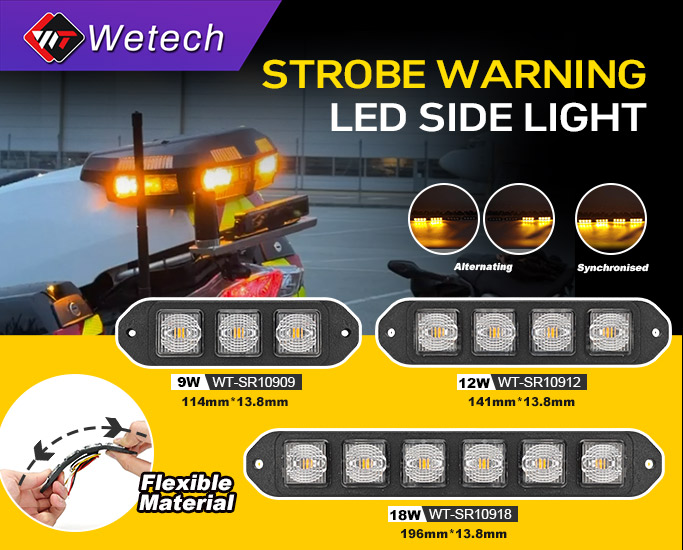
When it comes to vehicle safety, visibility and reliable warning illumination are non-negotiable, whether you operate heavy-duty trucks, trailers, off-road vehicles, industrial machinery, agricultural equipment, or marine vessels. Wetech premium Strobe Warning LED Side Lights are engineered to deliver outstanding brightness, unmatched durability, and versatile functionality to upgrade your on-site and on-road safety. Designed for extreme working environments, these flexible LED strobe side lights combine advanced OSRAM LED technology, IP69 ultra waterproof protection, and multi-flash modes to keep you and your equipment safe day and night. Core Product Features & Specifications Superior LED Lighting Performance Our Wetech LED strobe warning lights adopt top-tier OSRAM 3030 LED chips, ensuring ultra-high brightness, low energy consumption, and an extra-long service lifespan. Available in 3 power options to meet all your application demands: 9W model (WT-SR10909): Compact size 114mm * 13.8mm 12W model (WT-SR10912): Mid-size 141mm * 13.8mm 18W model (WT-SR10918): Large high-output size 196mm * 13.8mm Working voltage supports universal 12-24V DC, compatible with almost all 12V and 24V vehicle and industrial electrical systems. Dual Flash Modes & Customizable Operation This series LED warning side lights come with 18 unique flashing patterns for different safety warning scenarios. You can easily switch between modes via the pattern control wire: Synchronised flashing: All connected lights flash in unison for maximum high-visibility warning effect Alternating flashing: Lights flash alternately for eye-catching, attention-grabbing alert Supports individual single light flashing and group linked flashing Heavy-Duty Industrial Build & Premium Materials Built for the toughest conditions: Lens: High-strength PC lens, scratch-resistant, impact-proof and UV-resistant Housing: Soft flexible PP rubber base, easy to install on curved and uneven surfaces Ultra waterproof rating: IP69, fully dust-proof, high-pressure water wash resistant, works perfectly in heavy rain, snow, mud, car wash and harsh outdoor working sites Full official certifications: ECE R65 & ECE R10 approved, meets international safety and EMC standards for global road and industrial use Simple Wiring & Easy Installation Universal 4-wire design for straightforward plug-and-play setup: Black wire: Negative (-) Red wire: Positive (+) Yellow wire: Flash pattern mode switch White wire: Sync signal wire for multi-light linked connection Thanks to the flexible soft material body, these slim side marker lights can be mounted on almost any flat or curved position of your vehicle or equipment without complicated modification. Wide Application Scenarios Wetech strobe warning LED side lights are extremely versatile for nearly all heavy-duty and commercial use cases: Commercial trucks, semi-trucks, trailers and vans Off-road vehicles, 4x4, ATV, UTV and pickup trucks Agricultural tractors and farming machinery Engineering construction vehicles and industrial heavy equipment Marine ships, workboats and dockside warning areas Factory safety warning zones, warehouse and logistics working areas Emergency service vehicles, work trucks and utility vehicles Why Choose Wetech LED Strobe Warning Side Lights? Maximize Safety Visibility: High lumen output ensures your vehicle and equipment are clearly noticed in low light, bad weather and high-traffic busy working areas, drastically reducing collision risks All-Weather Reliability: IP69 highest level waterproof rating withstands extreme weather, high temperature, vibration and rough outdoor use Long Term Cost Saving: Energy efficient OSRAM LED chips generate less heat, consume less power, and maintain stable performance for tens of thousands of working hours Global Certified Quality: ECE R65 and ECE R10 certified for legal on-road and industrial operation worldwide Perfect Flexible Fit: Slim ultra-thin design + flexible body for easy mounting anywhere, no space limitation Customizable Flash Options: 18 flash patterns + sync/alternate dual function to match any warning requirement Final Verdict If you are searching for durable, bright, certified and multi-functional LED strobe warning side marker lights for trucks, machinery, off-road and industrial use, Wetech 9W/12W/18W IP69 waterproof LED warning strobe lights are your ideal solution. Upgrade your vehicle and worksite safety today with reliable, long-lasting, high-performance LED warning lighting that works as hard as you do.
View More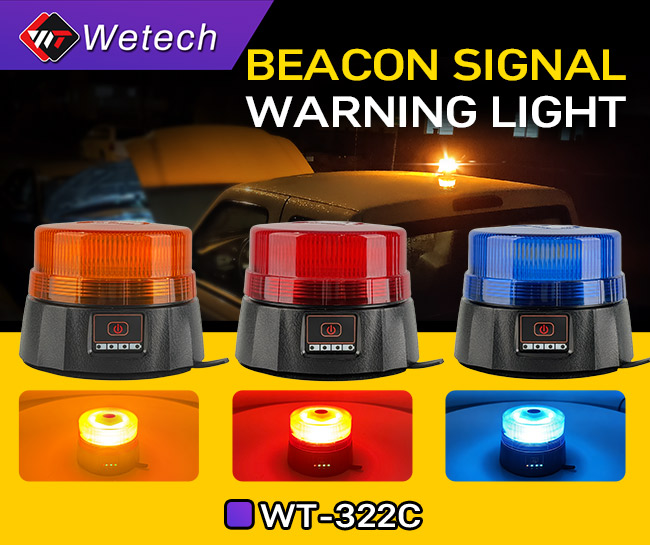
In an environment where hazards can emerge at any moment, visibility is not just a convenience—it is a critical component of safety. Whether on a busy highway, a chaotic construction site, or a remote trail, the ability to signal one's presence can mean the difference between a close call and a catastrophe. At the heart of modern safety technology lies the rechargeable beacon signal warning light: a compact, powerful, and versatile device designed to alert, warn, and protect. The Evolution of the Warning Beacon Traditionally, warning beacons were bulky, power-hungry devices tethered to vehicle cigarette lighters or disposable battery systems. They served their purpose but came with significant limitations: limited runtime, high operational costs, and a lack of portability. The advent of LED (Light Emitting Diode) technology, combined with advanced lithium-ion battery systems, has revolutionized this space. The modern rechargeable beacon signal warning light is a triumph of engineering, offering intense illumination while remaining cordless and sustainable . These devices are no longer just "lights"; they are intelligent safety systems designed for maximum adaptability. Key Technological Features Today’s market offers a diverse range of warning beacons, but the most effective models share a core set of technological advancements. 1. High-Intensity LED Arrays and Visibility The primary function of a beacon is to be seen. Modern units utilize multiple LEDs to achieve Class 3 visibility, meaning they can be detected from up to 800 meters away or more . Some high-performance models boast visibility ranges extending to nearly a mile at night, ensuring that oncoming traffic or rescue aircraft can pinpoint a location with ease . Unlike old rotating bulbs, LED arrays can create 360-degree illumination patterns without moving parts, reducing mechanical failure . 2. Multi-Color Capabilities and Flash Patterns Versatility is key. A single device now often supports a spectrum of colors—amber for construction, red/blue for emergency response, green for security, and even white for general illumination . Advanced models go a step further by offering multiple flash patterns. Users can switch between rotating effects, single strobes, quad-flash, alternating blinks, and even SOS distress signals depending on the regulatory requirement or scenario . 3. Durability and Environmental Resistance A warning light is useless if it fails in harsh weather. High-quality rechargeable beacons are built to withstand extreme conditions. Constructed from reinforced composites or polycarbonate, they are often shatterproof, crushproof, and corrosion-proof . Many boast IP (Ingress Protection) ratings of IP68, meaning they are not only dust-tight but can survive submersion in water—sometimes to depths of up to 80 meters or more . This durability extends to temperature resilience as well, with military-spec models operating reliably in ranges from -40°C to over 100°C . 4. Cordless Freedom and Versatile Mounting The "rechargeable" aspect eliminates the "umbilical cord" of the past. Powered by long-life Li-ion batteries, these units can operate for anywhere from 8 hours on high-intensity strobe to over 60 hours in single-blink economy modes . When power runs low, USB-C connectivity allows for convenient charging from wall adapters, vehicles, or portable power banks . To complement their cordless nature, these beacons feature incredibly versatile mounting options. Heavy-duty magnetic bases allow for instant attachment to car roofs, truck doors, or machinery without tools . For tactical or outdoor use, hook-and-loop fasteners, MOLLE-compatible clips, and helmet mounts ensure the light goes where the user goes . Applications Across Industries The adaptability of the rechargeable beacon signal warning light has made it indispensable across a wide spectrum of fields. Roadside and Traffic Safety: From broken-down passenger vehicles to slow-moving construction trucks, these lights provide the immediate visibility required to prevent secondary accidents. They are essential for police, tow truck drivers, and highways maintenance crews . Emergency Services: Police, fire, and rescue personnel utilize multi-color beacons for scene management. The ability to quickly deploy a magnetic light to mark a hazard or a landing zone is invaluable. The lack of cords means first responders can move freely without tripping hazards . Construction and Industrial Sites: In noisy or dusty environments, visual signals are often more effective than audible ones. These lights mark hazardous machinery, excavation pits, and restricted areas, ensuring worker safety . Outdoor Recreation and Tactical Use: For cyclists, hikers, and runners, these compact lights offer a lifeline. In tactical scenarios, they are used for team identification, covert marking (using IR modes), and perimeter signaling . Their ability to float also makes them ideal for marine safety .
View More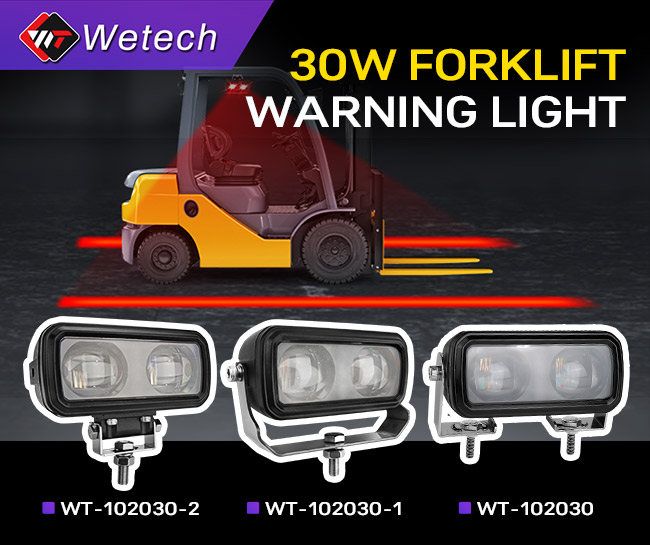
The Wetech 30W Forklift Warning Light is a cost-effective, high-impact safety solution that transforms forklift operations from high-risk to controlled and predictable. By creating a clear visual safety perimeter, it protects workers, equipment, and inventory while aligning with global industrial safety best practices. Our 30W Forklift Warning Light is a specialized LED safety device designed to create a highly visible red warning zone on the ground around operating forklifts. It projects a crisp, bright red line/area to clearly define the forklift’s operational boundary, alerting pedestrians and nearby workers to maintain a safe distance and avoid collision risks. With three mounting options (WT-102030, WT-102030-1, WT-102030-2), it adapts to diverse forklift models and installation preferences, delivering reliable performance in industrial environments.
View More
The WT-102060-C Warehouse Safety Warning Light from Wetech is a high-performance LED warning system designed to enhance pedestrian and equipment safety in industrial environments. It projects vivid, high-visibility colored light zones (red, blue, green) on the floor, creating clear visual boundaries to alert workers of moving machinery, restricted areas, or potential hazards. The Wetech WT-102060-C Warehouse Safety Warning Light is a cost-effective, reliable solution for mitigating risks in modern warehouses and industrial facilities. By leveraging high-visibility LED projection, it creates clear, intuitive safety boundaries that protect both workers and equipment, making it an essential investment for any operation prioritizing workplace safety. https://youtu.be/RBtka_frC1Q Forklift Safety Light site:https://www.wetechhk.com/
View More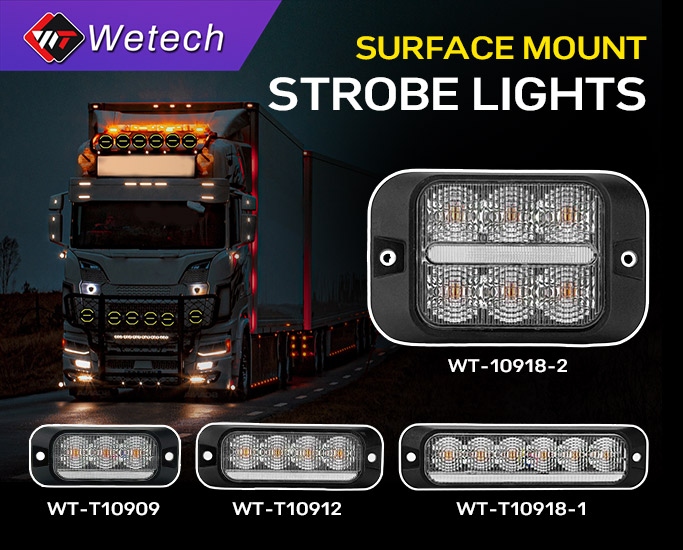
Wetech’s surface-mount strobe lights (models WT-T10909, WT-T10912, WT-T10918-1, WT-T10918-2) are high-intensity, durable warning lights designed for heavy-duty vehicles and industrial equipment. Featuring a compact, low-profile design and powerful LED output, these lights deliver maximum visibility in all weather and lighting conditions, making them ideal for enhancing safety on the road and in work zones. Heavy-Duty Truck & Fleet Safety Emergency & warning signaling: Ideal for semi-trucks, delivery fleets, and construction vehicles to signal lane changes, turns, or hazard situations on highways and urban roads. Multi-vehicle convoys: Used as marker lights to improve visibility in large vehicle formations, reducing the risk of rear-end collisions. Construction & Heavy Machinery Job site visibility: Mounted on excavators, bulldozers, and loaders to alert workers and other equipment operators of movement in busy construction zones. Low-light operation: High-intensity LEDs ensure visibility during dawn, dusk, and night shifts, even in dusty or foggy conditions。 Emergency & Utility Vehicles First responder signaling: Used on tow trucks, utility service vehicles, and roadside assistance vehicles to warn oncoming traffic of stopped or slow-moving operations. Compliance with road safety regulations: Meets DOT and other regional standards for vehicle warning lights, ensuring legal compliance. Agricultural & Off-Road Equipment Farm machinery safety: Mounted on tractors, harvesters, and other farm equipment to improve visibility in rural areas with limited lighting.Off-road adventure: Used on ATVs, UTVs, and off-road trucks to signal presence in remote, low-visibility environments.
View More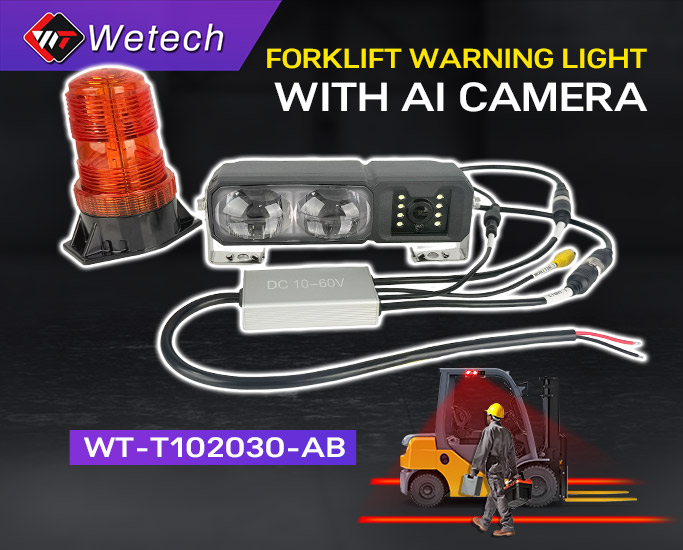
The Wetech WT-T102030-AB is an all-in-one forklift safety system that combines a high-visibility warning beacon, dual LED work lights, and an AI-powered camera. Designed for DC 10–60V power input, it delivers intelligent pedestrian detection, collision avoidance, and enhanced visibility for industrial material handling operations. Key Applications 1. Pedestrian Detection & Collision Avoidance AI-powered visual recognition: The built-in camera uses advanced algorithms to detect pedestrians, obstacles, and other forklifts in the forklift’s path, even in low-light or dusty environments. Proactive alerts: When a hazard is detected, the system triggers both visual (flashing beacon) and optional audio warnings to alert the operator and nearby workers, reducing the risk of accidents. 2. Warehouse & Logistics Operations High-traffic aisles: Ideal for busy warehouses, distribution centers, and manufacturing floors where forklifts and pedestrians share space. Low-light conditions: The dual LED lights provide bright, focused illumination, while the AI camera ensures reliable detection in dimly lit storage areas or night shifts. 3. Construction & Industrial Sites Rugged environments: The system is built to withstand the vibrations, shocks, and harsh conditions of construction sites, ports, and heavy industrial facilities. Multi-vehicle operations: Helps prevent collisions between forklifts, pallet jacks, and other heavy machinery in congested work zones. 4. Compliance & Safety Standards Regulatory alignment: Supports compliance with OSHA, ISO, and other global safety standards for material handling equipment by reducing preventable accidents. Incident documentation: The AI camera can record video footage of near-misses or incidents, providing valuable data for root-cause analysis and safety training.
View More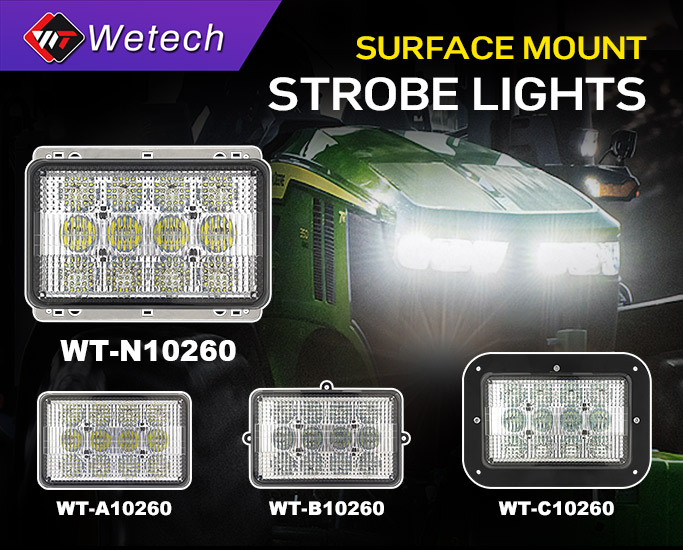
For millennia, agriculture has been tethered to the sun’s rhythms. Today, a quiet revolution is unfolding under the gentle glow of Light-Emitting Diodes (LEDs). LED agriculture lighting is not merely a tool for extending the day; it is a precise scientific instrument that is fundamentally transforming how we cultivate plants, offering solutions to some of the most pressing challenges of our time. At its core, LED technology’s power lies in its spectral precision and energy efficiency. Unlike traditional high-pressure sodium or fluorescent lamps, LEDs can be engineered to emit specific wavelengths of light that plants use for photosynthesis and growth regulation. Scientists can now create custom "light recipes" tailored to each crop and desired outcome. A burst of blue light can promote compact, leafy growth in lettuce and herbs. An increase in red light can stimulate flowering and fruiting in tomatoes and strawberries. This precise spectral control allows for the optimization of plant morphology, nutrient content, and yield in a way never before possible. The applications are vast and transformative. In vertical farms and controlled environment agriculture (CEA), stacked layers of crops thrive year-round under LED arrays, independent of external weather or seasons. This enables hyper-local food production in urban centers, drastically reducing transport distances and associated carbon emissions. For greenhouse growers, LED supplemental lighting fine-tunes the light spectrum, compensating for weak winter sun and accelerating growth cycles. Researchers also use specialized LED regimens to boost the production of valuable phytochemicals in medicinal plants, creating more potent and consistent extracts. The benefits extend far beyond crop manipulation. LED lights are remarkably energy-efficient, converting most of their input into usable light rather than wasted heat. This dramatically reduces electricity costs and the carbon footprint of indoor farming. Their low heat output also allows lights to be placed closer to the canopy without scorching plants, maximizing space and light absorption. Furthermore, their long lifespan and durability minimize maintenance and replacement costs, contributing to greater economic sustainability for farmers. Perhaps most critically, LED agricultural lighting is a cornerstone of climate-resilient farming. As arable land shrinks and climate volatility increases, CEA facilities powered by LEDs offer a stable, predictable environment for food production. When combined with renewable energy sources like solar or wind, these systems can become nearly self-sustaining arcs of production, conserving water through recirculation and eliminating the need for pesticides. In conclusion, LED agriculture lighting represents a paradigm shift from farming as an outdoor practice to plant cultivation as a tunable, technological science. It decouples food security from geographical and climatic constraints, promising a future of abundant, nutritious, and locally grown produce. By illuminating plants with intelligence and efficiency, this technology is sowing the seeds for a greener, more sustainable, and more resilient agricultural future—a true Green Revolution for the 21st century.
View More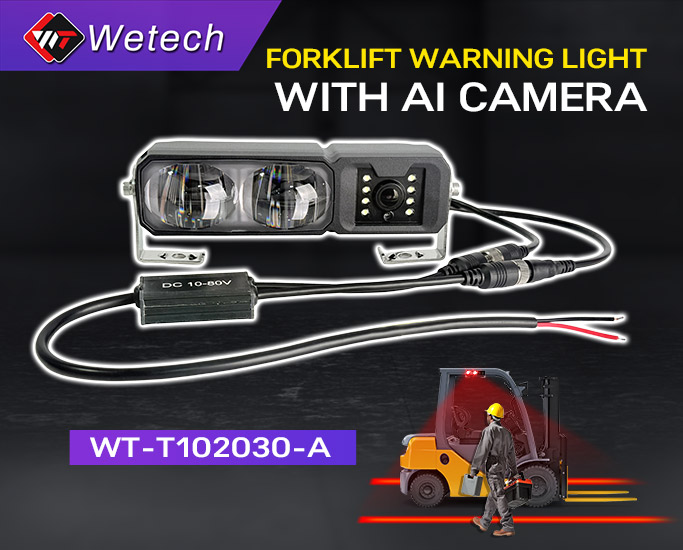
In the bustling environment of modern warehouses and industrial facilities, safety is paramount. Among the various hazards, the movement of forklifts poses a significant risk to both pedestrians and infrastructure. Traditional safety measures, such as audible alarms and flashing lights, have long been employed to mark forklift perimeters. However, the integration of Artificial Intelligence (AI) cameras into forklift warning line light systems represents a revolutionary leap forward, transforming passive alerts into active, intelligent guardians of workplace safety. A standard forklift warning line light projects a highly visible beam—often red or blue—onto the floor around the vehicle, creating a dynamic "zone of danger" that moves with the forklift. This visual boundary effectively warns nearby personnel to maintain a safe distance. The integration of an AI camera elevates this system from a simple visual cue to a sophisticated monitoring and prevention tool. The camera, strategically mounted on the forklift, continuously scans the projected warning zone and its immediate surroundings. The true power lies in the AI-powered software processing this visual data in real-time. Using advanced computer vision algorithms, the system can accurately distinguish between static objects (like racks or pallets) and human workers. When a pedestrian breaches or lingers within the warning line, the AI camera instantly identifies the intrusion. The system can then initiate a multi-tiered response. The primary warning light may intensify its flashing pattern or change color. Simultaneously, an alert can be sent directly to the forklift operator’s dashboard display, pinpointing the location of the intrusion. More advanced systems can even trigger directional audible warnings aimed at the pedestrian or automatically slow down the forklift’s operation. The benefits of this synergy are profound. First and foremost, it proactively prevents accidents. By identifying risks before a collision occurs, it addresses the limitations of human observation, especially in noisy, visually cluttered, or high-traffic environments where operator attention can be divided. Secondly, it provides actionable data for safety management. The AI system can log near-miss events, identify high-risk zones within the facility, and analyze patterns of unsafe behavior. This data is invaluable for targeted safety training and optimizing workplace layout. Furthermore, this technology fosters a shared safety culture. It acts as an impartial monitor, encouraging both operators and pedestrians to be more vigilant. Operators gain an enhanced "safety".
View More
In the challenging and often perilous environment of underground mining, illumination is not merely a convenience—it is a fundamental pillar of safety, productivity, and operational efficiency. For decades, mining operations relied on lighting solutions that were energy-intensive, fragile, and offered limited visibility. Today, a technological breakthrough is reshaping this landscape: the 40W High-Power LED Mining Light. This robust, intelligent lighting system represents a new standard for industrial illumination in the world's most demanding workplaces. Engineering for Extreme Environments At its core, this mining light is a masterpiece of purpose-driven engineering. Its 40-watt high-efficiency LED array delivers an astonishing 5,200-5,600 lumens of intense, daylight-spectrum (5000K-6500K) illumination. This surpasses the output of traditional 150W halogen or HID fixtures while consuming less than a third of the energy. The light is engineered with a 120-degree beam angle, casting a wide, uniform pool of light that eliminates dangerous shadows and dark spots, crucial for navigating uneven tunnels and operating heavy machinery. Durability is non-negotiable. The housing is crafted from high-grade aluminum alloy, acting as both a robust shield and an effective heat sink to manage thermal load and ensure a 50,000-hour LED lifespan. The lens is made of impact-resistant tempered glass with an anti-corrosion coating. Crucially, the fixture carries IP67 and explosion-proof (ATEX/IECEx) certifications, making it impervious to dust, water jets, and capable of operating safely in methane-rich or other hazardous atmospheres where a single spark could be catastrophic. Intelligent Features for Modern Mining Beyond raw power, this light integrates smart functionality: Universal Voltage Input (AC/DC 85-265V): It seamlessly integrates with existing mine power grids, battery systems, or mobile generators. Multiple Mounting Systems: A combination of strong neodymium magnets, adjustable brackets, and hook points allows for flexible installation on vehicles, scaffolding, or tunnel walls within minutes. Flicker-Free & Instant Start: Provides stable light that reduces eye strain and offers immediate full brightness without warm-up delays, even in freezing conditions. The Multifaceted Impact: Beyond Simple Illumination The deployment of the 40W LED Mining Light catalyzes a cascade of positive outcomes: Uncompromising Safety: Superior visibility directly reduces trip-and-fall incidents and improves spatial awareness for equipment operators. The explosion-proof design is a critical safeguard for worker lives. The robust construction withstands vibrations, impacts, and harsh chemicals. Dramatic Operational Efficiency: Miners can see geological features, mineral seams, and potential hazards with greater clarity, leading to more precise extraction and faster decision-making. Reduced downtime for light replacement and maintenance keeps operations running smoothly. Significant Economic & Environmental Benefits: The 60-70% energy savings translate into drastically lower electricity costs. The long service life slashes maintenance and replacement expenditures. This efficiency also reduces the operational carbon footprint of the mine, supporting sustainability goals. Enhanced Worker Well-being: The natural daylight spectrum and lack of flicker help combat fatigue, improve morale, and create a less oppressive working environment during long shifts underground. Application Versatility While designed for mining, its robustness makes it ideal for: Tunnel Construction & Civil Engineering Offshore Oil Rigs & Petrochemical Plants Emergency Response & Disaster Recovery Large-scale Industrial Warehousing & Shipyards Conclusion: A Brighter, Safer Future Underground The 40W High-Power LED Mining Light is more than just a piece of equipment; it is a transformative tool that bridges the gap between brute-force industrial need and advanced, humane technology. It turns dark, hazardous passages into well-lit workspaces, protecting invaluable human resources while optimizing material and energy resources. For any operation where light equals life, efficiency, and progress, this LED solution is not just an upgrade—it is an essential investment in a safer, more productive, and more sustainable future. Light the way forward. Empower your team with clarity, safety, and reliability.
View More


Phone : +86 -13924120087
Email : info@wetechhk.com
Address : UNIT NO.532B ON 5/F, STAR HOUSE, NO.3 SALISBURY ROAD, KOWLOON,HONGKONG
Factory Address: Dongguan, Guangdong Province, China
Copyright @ 2026 Wetech Electronic Technology Limited All Rights Reserved.  Network Supported
leave a message
Scan to Wechat :

Scan to WhatsApp :