Walk into any modern logistics warehouse or distribution center, and you will see the same picture: forklifts, pedestrians, racking aisles and loading docks all overlapping in a constant flow of activity. Mixed traffic is simply the reality of how warehouses run today. But that reality comes with a cost — collisions, workers wandering into active work zones, and forklift-related incidents remain stubbornly high across the industry.
Here is the thing about most of these incidents: they are rarely caused by careless operators. More often than not, the real issue is that boundaries are not clear enough. Pedestrians do not know where the safe walkway ends. Forklift drivers struggle to judge the extent of a danger zone. And temporary work spots often have no visual cue at all.
Traditional warehouses have long relied on painted floor lines, reflective tape and signage to mark aisles and hazard zones. The problem? These are all passive solutions, and in a busy warehouse they tend to fail when you need them most. In this article, we will break down why traditional floor markings fall short, explain how safety laser lights solve the problem at its source with active projection, and share what to look for when choosing a system for your own facility.
Why Traditional Floor Markings Keep Failing
Almost every warehouse safety system starts with the same basic idea: paint a line on the floor. It sounds simple enough. But in a real, high-frequency warehouse environment, that painted line ends up costing more and delivering less than most managers expect. The problems usually fall into three buckets.
1. They wear out fast, and maintenance is expensive
Forklift tires rolling over the same spot day after day, pallets being dragged across the floor, goods being shifted around — all of this adds up. Painted lines start cracking, peeling and fading within weeks in a busy facility. That means someone has to go back and repaint them on a regular schedule. And repainting usually means partially shutting down the affected area, which eats into both labor costs and operational throughput.
2. They disappear in low-light conditions
Paint and reflective tape are passive reflectors — they only work when there is enough ambient light bouncing off them. Head to the back of a deep racking aisle, a dim corridor corner, an enclosed loading dock or an underground storage area, and those markings become much harder to spot. In those conditions, pedestrians and forklift operators simply do not see the boundary in time.
3. Changing the layout is a genuine headache
Warehouse layouts are not static. Peak season means extra sorting areas. Promotional periods mean temporary stock storage. Equipment maintenance means an aisle gets blocked off for a few days. All of these changes require safety boundaries that can adapt quickly. But once paint is on the floor, changing it means scraping up the old line, re-measuring, repainting and waiting for it to dry. It is messy, time-consuming, and the fumes and dust do not help either. Reflective tape is not much better — peel it off and you are usually left with sticky residue that is a pain to clean. The end result? Temporary work zones often end up with no markings at all, and that is where hazards creep in.
The bottom line is straightforward: passive markings depend on external light, need constant upkeep, and cannot be adjusted quickly enough for modern warehouse operations. What warehouses actually need is a safety boundary that glows on its own, never wears out, and can be redeployed in minutes.
(WT-TZ8021-G1)
How Safety Laser Lights Actually Improve Warehouse Safety
The concept behind safety laser lights is refreshingly simple. A dedicated fixture projects a bright, straight line onto the floor — available in red, blue, green and other colors — creating a clear, continuous visual boundary. The key difference from paint is that this line emits its own light. It does not depend on ambient illumination, and it never touches the floor, which means it sidesteps all three major problems of passive markings.
1. Active illumination means visibility everywhere
The projected laser line produces high-contrast light in your choice of color, and it stays consistently recognizable whether you are in a bright main aisle, a dim racking tunnel, or a loading dock where sunlight and shadow shift throughout the day. The moment a pedestrian or forklift driver enters the field of view, they see the boundary — no extra lighting required.
2. Zero wear, basically no maintenance
Because the line is projected rather than applied, there is no contact with the floor. No rolling wear, no drag scratches, no peeling. Set it up once, calibrate the angle, and that line stays projected consistently for the long term. No repainting schedules, no shutdowns for worn markings — and over time, that adds up to real savings on safety management costs.
3. Flexible deployment, and you can change zones anytime
This is where laser lights really pull ahead of paint. Instead of scraping and repainting, you just loosen the bracket screws, adjust the projection angle, and retighten. When the warehouse layout shifts, when you add a temporary work zone, or when seasonal reconfiguration rolls around, you can have a new boundary in place within a few minutes. No scraping, no painting, no waiting for things to dry, no fumes or dust. It fits the way modern warehouses actually operate.
4. The visual warning effect is genuinely stronger
A bright projected line on the floor creates a clear psychological "do not cross" signal. Both research and real-world deployments bear this out: actively illuminated lines get more attention than passive paint. Pedestrians instinctively avoid the lit zone, and forklift drivers can judge their working range more precisely. That behavioral shift is where the real accident reduction comes from.
What to Look for When Choosing Warehouse Safety Laser Lights
No two warehouses are exactly alike. You might have a dry ambient-temperature facility or a humid cold-storage warehouse. You might need fixed main aisle markings or dynamic zones that move with forklifts. When evaluating options, keep these five factors front of mind.
1. Power supply type
The power source dictates where the fixture can realistically be used. DC models offer a wide voltage range and can tap directly into the onboard power of forklifts, AGVs and tractors, making them ideal for projecting dynamic safety zones that move with the equipment. AC models, on the other hand, run on standard mains power and are meant for fixed mounting — ceilings, walls, overhead structures — where they project long-term boundaries for main aisles and loading docks.
2. Projection distance and line length
Different mounting heights produce different line lengths. Before buying, work out your mounting height and aisle width, then make sure the projected line fully covers the boundary without falling short or spilling over into unrelated areas. Most manufacturers provide a projection-distance-to-line-length reference table, which makes this straightforward to check.
3. Protection rating
The IP rating tells you what kind of environment the fixture can handle. For a dry, clean warehouse at normal temperatures, a basic IPX4 rating is usually enough. But if your facility is humid, dusty, uses wash-down procedures, or includes cold-storage areas and outdoor loading zones, you will want IP65 or higher to keep dust and moisture out of the housing and protect the lifespan of the unit.
4. Adjustable line width
Aisles in a warehouse are rarely all the same width. Main aisles are wide, branch aisles are narrow, and work zones vary in size. If the fixture supports line width adjustment — usually via an accessory — you can fine-tune the thickness and coverage of the projected line to suit different layouts. One fixture model covers more scenarios, you carry less inventory, and reconfiguration becomes much simpler.
5. Operating temperature range
Most warehouses stay within a mild temperature range, but cold-storage facilities, outdoor docks and unheated warehouses in colder climates can push well outside that. Check that the fixture operating temperature covers your actual environment — the last thing you want is brightness dropping off or the unit failing to start when the temperature hits an extreme.
These five dimensions give you a complete framework for evaluating warehouse safety laser lights. Everything from power supply and projection quality to protection rating and environmental adaptability affects the real-world experience and the actual safety outcome. With those requirements in mind, Wetech offers two targeted safety laser light products, each built for one of the two core scenarios: mobile onboard use and fixed-aisle long-term deployment.
(WT-TZ8021-R1)
Wetech Warehouse Safety Laser Lights
WT-TZ8021 — DC Onboard Model for Mobile Equipment
The WT-TZ8021 is a DC-powered laser safety light built specifically for mobile equipment. Think of it as a dynamic safety line that travels wherever the machine goes.
● Wide voltage compatibility: Supports DC 10–110V input, connects directly to the onboard power of forklifts, AGVs, tractors and other industrial vehicles — no extra transformer needed
● High-power light source: 500MW output, with red, blue, green and other custom colors available (standard model uses 638nm red); bright, strong penetration, projection distance 1–7m corresponding to line length 4.5–28m, covering most onboard operation scenarios
● Built to take a beating: Die-cast aluminum housing with good heat dissipation, impact and vibration resistant; IPX4 protection rated for onboard mobile environments; operating temperature -20°C to 70°C, lifespan over 10,000 hours
● Compact and flexible: Measures just 80×60×36.6mm, so it does not take up valuable space; mount it on top of the forklift, on the side, or on the overhead guard to project a dynamic safety boundary in real time as the vehicle moves
This model is especially well suited to forklifts, AGVs and other mobile equipment. Wherever the vehicle travels, the safety light projects with it, so surrounding pedestrians and other vehicles always have a clear sense of the machine working range.
WT-TZ8026-R — AC Fixed-Aisle Model with Adjustable Line Width
The WT-TZ8026-R is an AC-powered laser safety light designed for fixed aisles. Its whole purpose is to be a long-term, stable, flexibly adaptable boundary line that stays put and keeps working.
● Wide voltage mains input: Supports AC 100–260V, plugs straight into standard warehouse power, suitable for fixed mounting on ceilings, walls and columns
● Stable light projection: 14.1mW output, with red, blue, green and other custom colors available (standard model uses 650nm red); projection distance 1–9m corresponding to line length 4–28m, covering everything from narrow branch aisles to wide main thoroughfares
● Adjustable line width: Comes standard with a line width adjustment accessory, so you can fine-tune the thickness and coverage of the projected line based on aisle width; one fixture handles aisles of different sizes, and reconfiguration is quick and painless
● High protection and wide temperature range: Die-cast aluminum housing, IP65 rated for dust and water protection; operating temperature -40°C to 70°C, built for harsh environments including cold-storage warehouses, humid storage areas and dusty loading zones, lifespan over 10,000 hours
This model is the right choice for long-term deployment in fixed scenarios: warehouse main aisles, pedestrian-vehicle segregation zones, loading dock boundaries, cold-storage aisles and more. Install it once and it projects a clear boundary consistently. The adjustable line width also means it can keep up when your warehouse layout changes.
Practical Tips for Getting the Best Results
How well safety laser lights work depends not just on the product itself, but also on how you install and use them. Here are a few tips that have been validated in real deployments.
On mounting height: For fixed fixtures, aim for a mounting height of 3 to 5 meters. At that height, the projected line fully covers the aisle width without being constantly blocked by pedestrians or forklifts. For onboard models, mount them on top of the overhead guard or at a high point on the side of the vehicle, so cargo does not get in the way of the projection.
On aisle layout: For main aisles with mixed pedestrian and vehicle traffic, consider mounting fixtures on both sides facing each other. A projected line on each side creates a "dual-line corridor" effect that reinforces boundary awareness more strongly than a single line on one side. For loading dock edges, project a continuous line along the edge of the dock to make it unmistakably clear that this is a drop-off hazard zone.
Wrapping Up
The core challenge with warehouse aisle safety really comes down to one mismatch: traditional floor markings are passive, but modern warehouse operations demand something dynamic, efficient and low-maintenance. Paint wears out fast, disappears in low light, and is genuinely inconvenient to reconfigure — it simply does not keep up with what high-frequency warehouses need today.
Safety laser lights address these problems at the source through active illumination, zero wear and flexible deployment. They do not rely on ambient light, so they stay highly recognizable in any area. They do not touch the floor, so one installation keeps working for the long term. And their adjustable angles mean zone boundaries can be changed anytime, adapting quickly to shifts in warehouse layout.
Wetech two safety laser light products — the WT-TZ8021 DC onboard model and the WT-TZ8026-R AC fixed model — cover the two main scenarios of mobile equipment and fixed aisles respectively. Use them individually or pair them together to build a complete warehouse safety boundary system. For warehouse operators looking to bring down accident rates, cut safety maintenance costs and raise the overall level of safety management, safety laser lights are one of the highest-return safety upgrades you can make.
If you are planning a safety laser light solution for your warehouse, or you would like selection advice and pricing tailored to your specific scenarios, get in touch with Wetech. We will work with you to put together a customized warehouse safety boundary solution.
Frequently Asked Questions
1. Are safety laser lights visible in a bright warehouse?
Yes. Laser light maintains high contrast under most indoor lighting conditions, and higher-power models remain clearly visible even in strong ambient light.
2. Is installation complicated? Do I need a professional?
Not really. The fixed model (WT-TZ8026-R) connects to standard AC power, and the onboard model (WT-TZ8021) connects to vehicle DC power. Adjust the projection angle, fix the bracket, and you are done — no complex construction required. Most warehouse maintenance staff can handle it following the manual.
3. Are the lasers safe for human eyes?
Safe. Warehouse safety laser lights use safety-class lasers that will not harm human eyes under normal use. During daily operations, personnel see the light projected on the floor, not the direct light source, so it is completely safe. Simply avoid staring directly into the fixture outlet for extended periods. Of course, it is important to select appropriate products in accordance with local government regulations governing this type of lighting.
4. Can they be used in cold-storage warehouses?
Absolutely. The WT-TZ8026-R supports a wide operating temperature of -40°C to 70°C with IP65 protection, making it suitable for cold-storage warehouses, humid storage areas, dusty loading zones and other harsh environments. It keeps projecting a clear line even at low temperatures.
5. Do the laser lines wear out? Do they need repainting?
No. Safety laser lights are projected markings that do not contact the floor, so there is no rolling wear or drag scratching. Once installed and calibrated, the line stays projected consistently for the long term — no repainting, no shutdowns for worn markings.
6. What if my aisles have different widths? Do I need different models?
Not necessarily. The WT-TZ8026-R comes standard with a line width adjustment accessory, so you can fine-tune the thickness and coverage of the projected line based on aisle width. One fixture can handle aisles of different widths. If the width difference is especially large, you can also adapt by adjusting the mounting height and projection angle.
In the logistics and transportation industry, tail lifts are essential tools for loading and unloading goods at warehouse docks, roadside stops and delivery locations. However, these daily workhorses also come with significant safety risks, especially at night. Low-light conditions, busy dock operations and limited side visibility often leave pedestrians, forklift operators and passing vehicles unaware of an active tail lift until they are too close.
For fleet managers and warehouse operators, reducing tail lift-related accidents is not just a matter of compliance — it directly impacts personnel safety, operational efficiency and long-term cost control. This article will analyze the core reasons behind the high incidence of tail lift accidents at night, explain the limitations of traditional safety measures, and introduce the key criteria for selecting reliable tail lift warning lights for fleets.
Why Do Night-Time Tail Lift Operations Carry Higher Risks?
Accidents around tail lifts do not happen by chance. The root cause lies in the lack of visual cues in the working environment that people normally rely on to judge safety, which is mainly reflected in four aspects:
1. Greatly reduced boundary recognition: After nightfall, or in dimly lit warehouses and covered loading docks, a lowered tail lift blends into the surrounding ground. There is no clear visual boundary between the working zone and the pedestrian passage. Pedestrians may step into the tail lift working range without realizing it, and forklift operators are also prone to misjudging the safe distance when approaching the rear of the truck.
2. Natural blind spots from side views: From the side perspective, traditional reflective flags and stickers are almost invisible. Vehicles approaching from the side or passing personnel can hardly detect the position of the tail lift in time, significantly increasing the risks of side collisions and accidental intrusion.
3. Manual warnings are easy to overlook: Most manual warning devices rely on drivers or loading personnel to remember to turn them on. In high-intensity operations with multiple deliveries per day, it is easy for people to skip the step of turning on the lights, eventually forming silent and invisible safety hazards.
4. High risk of rear-end collisions during roadside loading: When a truck stops temporarily to unload, following vehicles often cannot recognize the working state in time on rainy, foggy days or in tunnels. Rear-end collisions are common causes of tail lift-related accidents.
Limitations of Traditional Tail Lift Safety Solutions
Most mainstream tail lift safety protections rely on passive or manual solutions, which have obvious shortcomings in actual operation scenarios. For example, reflective flags and stickers attached to tail lifts can only reflect light passively, depend on external light sources, and are almost invisible at night and from the side; painted floor markings on dock floors are only applicable to fixed docks, and cannot be used for mobile vehicles making multi-stop deliveries. None of these solutions can achieve both active light emission and automatic start-stop. Passive reflective accessories fail in the dark, and what is really needed is a warning solution that automatically activates when the tail lift enters the working state and is clearly visible from all directions.
Core Selection Criteria for High-Quality Tail Lift Warning Lights
The quality of tail lift warning lights varies greatly. To ensure reliable performance in night and dock operations, fleet managers must focus on evaluating four core indicators before bulk procurement:
1. Start-Stop Control: Different start-stop control methods can affect the convenience of staff. The tilt-sensing design enables the light to turn on automatically when the tail lift lowers to the working angle and turn off when it is stowed in place — no need to flip switches or press buttons, and no risk of starting work without safety protection.
2. Optical Performance: A high-quality strobe warning tail light can emit high-contrast intense flashes, which have strong penetrating power in the dark and bad weather. It should be clearly visible from the rear and both sides, ensuring that pedestrians and oncoming vehicles can receive the same level of warning. While steady marker lights have their value, strobe patterns are far more effective in grabbing attention in busy environments.
3. High Durability & Flexible Power Options: Installed on the side of the tail lift, the light is exposed to rain, road water spray, dust and constant vibration from driving and lifting all year round. An IP65-rated housing provides complete dust and water protection, and a rugged impact-resistant structure ensures a long service life under daily high-intensity use.We offer two power supply versions: rechargeable type and wired type, both with easy installation to fit different vehicle refitting demands.
4. Complete Compliance Certifications: Compliance certifications are crucial for fleet operation, especially for fleets in cross-border markets. It is necessary to confirm that the product has complete vehicle warning light performance certifications to ensure that it meets recognized safety and durability standards and can be deployed with confidence in different regions.
Wetech’s Strobe Warning Light Series Specifically Designed for Tail Lifts
Wetech has designed a series of warning lights specifically for tail lift safety issues, aiming to accurately solve the visibility and reliability problems that cause most loading dock accidents. Featuring multiple shape options, it is a core basic configuration for tail lift safety.
Core Functions and Advantages
• Tilt-activated automatic start-stop: Turns on automatically when the tail lift lowers to the working position and shuts off when it rises back to the driving position. No manual operation is required throughout the process, providing full protection even during high-intensity multi-delivery operations per day.
• High-brightness LED strobe: High-contrast flashing effect, clearly visible from the rear and both sides. Far superior to traditional side-invisible reflective solutions, it can clearly convey the working state in dim environments.
• IP65 protection rating: Fully dustproof and waterproof, resistant to rain, mud, dust and continuous vibration, suitable for all-weather outdoor operations.
• Complete international certifications: Passed relevant vehicle warning light performance certifications, complying with the compliance requirements of global markets.
• Rugged and durable structure: Impact and vibration resistant, adapting to the long-term driving of vehicles and the frequent lifting of tail lifts.
For fleet managers, this means a long-term low-maintenance safety upgrade after one installation: once installed, it can operate reliably in every shift without additional operation by drivers or recurring consumable costs.
Add-On Upgrade Solution: Red Line Warning Light
For docks with heavy pedestrian and forklift traffic, the JD-TL018 strobe light can be paired with the WT-102010-1 linear beam warning light to achieve a higher level of double-layer protection:
• The strobe tail light provides long-distance status reminders to let personnel know in advance that the vehicle is in operation.
• The linear beam warning light projects a red light strip on the ground to accurately mark the danger zone boundary and clarify the restricted area to avoid.
This combination is very suitable for scenario upgrades of 24-hour uninterrupted loading and unloading operations in distribution centers.
Core Application Scenarios
These lights deliver the most prominent value in environments with naturally limited visibility and high operation intensity, mainly covering four types of scenarios:
1. Warehouse Loading Docks: In indoor and covered docks with insufficient ambient light, the auto-on strobe light allows forklift operators and warehouse staff to instantly identify active tail lifts, greatly reducing side collisions and accidental intrusion by personnel.
2. Night Roadside Delivery: When unloading at temporary stops, the eye-catching flash alerts following drivers to the working vehicle much earlier, significantly reducing the risk of rear-end collisions during roadside loading.
3. Tunnels and Underground Loading Areas: These places have insufficient light all year round, where passive reflective accessories perform poorly. The active luminous strobe warning maintains high visibility from long distances, making up for the failure of traditional solutions.
4. Fleet Standardized Safety Upgrade: Uniform deployment of the same fully certified product across the entire fleet not only unifies safety protection standards but also simplifies compliance management and makes safety audits clearer and smoother.
Conclusion
Most tail lift accidents during night loading and dock operations are preventable. The high incidence of accidents is not due to personnel negligence, but the over-reliance on passive, manual and easily overlooked safety methods — these methods are not designed for the fast-paced logistics operation environment from the beginning.
A tilt-activated strobe warning light specifically designed for tail lifts solves the core problem from the root: it automatically provides full-process, all-angle visible warning when the tail lift enters the working state, requires no additional operation by drivers, can withstand harsh vehicle operating conditions, and meets global compliance standards. For sites requiring higher protection levels, adding a red line projection light can further strengthen the boundary warning effect.
For warehouse operators and fleet managers looking to reduce loading dock accident rates and improve safety compliance, upgrading tail lift warning lights is one of the most straightforward and cost-effective measures. If you want to learn more about Wetech’s vehicle tail light styles, their upgrade solutions, certification details, etc., welcome to contact us for customized solution recommendations.
Frequently Asked Questions
1. Do tail lift warning lights only work at night? No. They are most effective at night, but the strobe pattern also has high recognition in daylight, providing clear warnings around the clock.
2. Do I need to turn the light on and off manually? No. The tilt-sensing model will turn on automatically when the tail lift lowers and turn off when it is stowed, without manual operation.
3. Are they waterproof for outdoor use? Yes. High-quality products all reach IP65 protection rating, with efficient dust and water resistance, designed for all-weather outdoor operations.
4. Can I add ground projection later if I only install strobe lights first? Yes. The strobe warning light itself is a complete independent solution, and the linear beam projection light can be added as an upgrade at any time to adapt to sites with higher protection needs.
Across construction sites, mining operations, industrial yards and logistics warehouses, all types of industrial machinery — excavators, loaders, bulldozers, forklifts and more — are central to productivity, but they also carry significant safety risks. The vast majority of industrial equipment accidents do not stem from operator error alone. They originate from blind spots: large invisible zones around the machine where ground pedestrians, workers and smaller equipment are completely out of the operator’s view from the cab.
Statistics show that struck-by and crushing incidents involving industrial machinery consistently rank among the leading causes of workplace accidents in the construction, mining and logistics warehousing sectors. Even experienced operators cannot see what is directly behind, beside or below their equipment, and traditional warning methods often fail to keep personnel at a safe distance.
This article breaks down the core reasons behind the high rate of blind-spot accidents with industrial machinery, analyzes the limitations of standard safety measures, and explains how AI boundary light systems deliver a proven, visible and reliable solution to reduce collision and crush risks across all types of working environments.
Why Industrial Machinery Blind Spots Lead to Frequent Accidents
1. Extensive Invisible Zones Around Equipment
A standard excavator has blind spots on all four sides, plus a direct dead zone below the operator’s line of sight. For larger bulldozers and wheel loaders, the blind zone can extend several meters outward from the machine body. Even indoor forklifts have significant blind areas on both sides and at the rear. Workers standing in these zones remain fully invisible to the operator, even with mirrors and cameras.
2. Dynamic, Constantly Changing Work Environments
Construction sites, warehouses and mining operations are all fast-moving work environments. Personnel walk between machines, vehicles reverse unexpectedly, and work zones shift throughout the day. Static safety plans cannot keep up with these constant changes, and workers may enter danger zones without realizing it.
3. Audible Warnings Are Easily Overlooked
Reversing beepers and horns have been the industry standard for decades, but they have critical shortcomings. In high-noise environments where multiple machines run simultaneously, alarm sounds blend into background noise. Workers also develop auditory desensitization from constant exposure to beeping, and gradually become less responsive to warnings over time.
4. Painted Floor Lines Wear Off Quickly
Many facilities mark danger zones with paint or tape on the ground. In muddy, dusty and high-traffic conditions, these markings fade, crack and disappear within weeks. Once worn, they no longer provide clear visual guidance for workers.
Why Traditional Safety Solutions Fall Short
Solution
Key Limitation
Reverse beepers
Easily ignored, drowned out by site noise
Side mirrors
Still leave blind spots, rely on operator attention
Painted floor markings
Wear quickly, nearly invisible in dust and mud
Physical barriers
Cannot move with equipment, impractical for mobile machinery
Human spotters
Prone to human error, high labor cost, limited coverage
Each of these methods has value, but none deliver a dynamic safety boundary that moves with the equipment and remains clearly visible at all times. This is where AI boundary light systems make a fundamental difference.
How AI Boundary Light Systems Reduce Blind Spot Risks
An AI boundary light is an integrated safety lighting system that projects a bright, clear red warning line on the ground around industrial machinery, creating a visible moving danger perimeter that travels with the equipment — wherever the machine goes, the safety zone follows.
1. Continuous Visible Boundary That Moves With the Equipment
Unlike painted lines or fixed barriers, the projected boundary moves in real time as the equipment travels, turns and reverses. The bright red line is visible from all angles and remains highly recognizable even in bright sunlight, dusty conditions and low-light environments. Ground personnel can instantly identify the danger zone boundary and move clear.
2. Dual-Layer Warning for Stronger Protection
Premium AI boundary light systems use a combined audio-visual warning approach:
Static red warning line: Permanently marks the fixed danger perimeter around the equipment for ongoing safety awareness
Dynamic amber strobe beacon: Triggers during high-risk movements such as reversing and startup for enhanced immediate warning, with optional voice broadcast function available for even stronger alert effectiveness
This dual mechanism ensures workers recognize the boundary from a distance (red line pre-warning) and receive a strong audio-visual alert when approaching immediate danger.
3. Intelligent Proximity Detection for Automatic Warning Enhancement
Advanced systems feature smart sensing capability: when a worker steps too close to the warning boundary, the system automatically intensifies its flash pattern to deliver a clear, unmistakable warning to back off. This adds an extra layer of active protection on top of passive marking.
4. Built for All Types of Industrial Environments
Quality AI boundary lights are designed to industrial-grade standards and built to withstand working conditions across different scenarios:
Rugged aluminum housing: High shock and vibration resistance, suitable for equipment under continuous vibrating operation
IP65+ dust and waterproof rating: Stable performance in rain, mud, dust and extreme temperatures
Wide voltage compatibility (DC 10–80V): Works with all types of industrial vehicle electrical systems
Easy installation: Seamless mounting on everything from indoor forklifts to outdoor heavy construction equipment
Core Application Scenarios for AI Boundary Lights
Construction Sites
For excavators, loaders and bulldozers in earthmoving operations, AI boundary lights clearly mark equipment working ranges and drastically reduce blind-spot crush accidents during loading, grading and reversing.
Mining Operations
In dusty, low-visibility mining environments where paint markings disappear within days, projected boundaries remain bright and clear, continuously marking danger zones around heavy haulers and loading equipment.
Industrial Yards & Warehouses
For heavy forklifts, yard tractors and loading equipment, projected safety lines clearly separate pedestrian and vehicle zones and reduce collision risks in high-traffic loading areas.
Wetech Industrial Machinery AI Protection Boundary Light Systems
Wetech provides full-scenario industrial machinery AI protection boundary light solutions, covering everything from indoor forklifts to outdoor heavy construction equipment, with customizable combinations available on demand.
1. WT-T102030 Series (Indoor Scenario Adaptation)
This complete solution is designed for indoor forklifts, warehouse AGVs and similar equipment. It is used for pedestrian-vehicle collision prevention within facility premises, clearly marking vehicle travel boundaries and reducing intersection risks in warehouses and workshops.
2. WT-239002-A Series (Outdoor Heavy Machinery Adaptation)
An integrated safety system purpose-built for outdoor heavy construction equipment including excavators, loaders and bulldozers.
Each complete set includes 3 red warning boundary lamps, 1 multi-wire control driver and 1 amber warning strobe light (voice function optional). Additional accessories such as in-cab displays and AI radar sensing modules can be added according to requirements. Warning lights, strobe lights, AI radar, displays and other components can all be flexibly customized to fit specific needs.
Core Advantages
High-intensity red warning boundary marking: Projects bright, sharp red safety lines visible from all angles, clearly defining restricted work zones
Wide safety coverage and accident prevention: Creates a large, clear safety perimeter around equipment to eliminate blind spots and drastically reduce crushing, reversing and collision accidents
Heavy-duty rugged construction: Solid one-piece aluminum housing with excellent shock and vibration resistance, built for high-intensity continuous operation
IP65+ rated full weatherproof reliability: Performs stably year-round in rain, heavy dust, mud and extreme temperatures, without water intrusion or component failure
Universal wide voltage compatibility: Supports DC 10–80V wide input, compatible with nearly all construction vehicle electrical systems for plug-and-play installation
Application Value
Wetech AI boundary lights combine warning boundary marking and strobe warning lights into one complete safety solution, delivering dual-layer visual protection: static red warning zoning plus dynamic amber strobe alerts. It clarifies equipment operational limits, improves on-site visual safety awareness and meets workplace safety compliance requirements, making heavy machinery operations safer with clearer boundaries.
Conclusion
Industrial machinery blind spots are an inherent challenge across construction, mining and warehousing scenarios, but they do not have to result in high accident rates. The root problem is that traditional warning methods — manual reminders, mirrors, painted lines — are either easily ignored, have poor visibility, or cannot move with the equipment.
AI boundary light systems solve this at the source by creating a bright, moving, always-visible danger perimeter that travels with the equipment. Combined with dynamic strobe warnings, optional voice alerts and intelligent proximity response, they deliver a level of active visual protection that static solutions cannot match.
For construction fleets, mining operators and logistics warehouse parks looking to reduce blind-spot accidents and improve safety compliance, AI boundary lighting is one of the most cost-effective, high-impact safety upgrades available. If you need a complete boundary safety solution for your industrial fleet, welcome to contact Wetech for product details and customized configuration guidance.
Frequently Asked Questions
l Will the warning line be visible in direct outdoor sunlight?
Yes. We recommend the appropriate model based on your equipment and usage scenario, with different power levels to ensure the warning line remains clearly visible even in strong outdoor sunlight.
l Can these lights be installed on all types of industrial equipment?
Yes. Universal mounting brackets plus wide voltage design make them compatible with the vast majority of industrial machinery, from indoor forklifts to excavators, wheel loaders, bulldozers and dump trucks.
l Are they waterproof for outdoor use?
All models carry IP65+ protection ratings with reliable dust and waterproof performance, suitable for all-weather outdoor operation on construction sites, mining operations and similar environments.
Gobo projectors are versatile lighting devices that combine safety warning, path guidance and brand projection functions. However, their real-world effectiveness depends heavily on proper installation positioning. The right placement maximizes visibility, improves safety compliance and delivers long-term value, while poor placement wastes investment and fails to achieve expected results.
This article outlines the most practical installation positions across four major application scenarios, focusing primarily on vehicle-mounted safety projectors and fixed industrial warehouse projectors, with supplementary coverage of public transportation and commercial retail use cases. It also includes power matching recommendations to help you select the right model for each position.
1. Vehicle-Mounted Applications: Installation Positions for Industrial Vehicle Logo Projectors
Vehicle-mounted gobo projectors are dynamic safety warning devices that move with industrial equipment. They project clear visual markers onto the ground as the vehicle travels, alerting nearby pedestrians and workers to keep clear in real time.
1.1 Front of Forklifts
Installation position: Mounted centrally under the front of the forklift, projecting forward and downward onto the floor.
Function: Projects warning triangles, STOP signs or custom safety logos so pedestrians ahead can detect approaching forklifts from a distance and take evasive action early.
Best for: Narrow warehouse aisles, high-traffic zones and mixed pedestrian-and-forklift areas.
Recommended power: 20W–50W low-power series.
1.2 Sides and Rear of Forklifts
Installation position: Mounted on both sides or the rear of the forklift body, projecting sideways or backward onto the ground.
Function: Marks the forklift's safe operating perimeter. Side and rear workers can clearly identify the vehicle boundary and avoid side collisions or tail-swing accidents.
Best for: Racking aisles, loading and unloading operation zones.
Recommended power: 20W–50W low-power series.
1.3 AGVs and Automated Warehouse Robots
Installation position: Mounted around the vehicle body, often using multiple units for full perimeter coverage.
Function: Projects dynamic safety warning zones around automated equipment in automated warehouses, alerting on-site staff to the robot's travel path.
Recommended power: 20W–50W low-power series.
1.4 Heavy Construction Machinery (Loaders, Bulldozers, etc.)
Installation position: Mounted on top of the cab or at the four corners of the vehicle body, projecting outward to mark the working radius boundary.
Function: Defines the vehicle's danger zone on construction sites, so ground personnel can clearly recognize the operating boundary and maintain a safe distance.
Recommended power: 50W–150W low-to-medium power models.
2. Industrial Warehouse Applications: Installation Positions for Fixed Logo Projectors
Fixed gobo projectors are permanently installed on ceilings, crossbeams or pillars. They replace easily worn floor paint and tape markings, delivering maintenance-free, long-lasting visual guidance and safety warnings.
2.1 Main Aisle Entrances and Crossings
Installation position: Ceiling-mounted or mounted on overhead crossbeams, projecting downward onto the floor.
Function: Projects "Forklift Crossing", "Slow Down", "STOP" and other warning signs to remind pedestrians and vehicles entering the aisle to slow down and watch for traffic.
Best for: High-traffic T-junctions, cross intersections and main aisle entrances.
Recommended power: 150W–240W medium-power series.
2.2 Ends of Racking Aisles
Installation position: Mounted at the top end of each aisle, projecting directional markers along the aisle floor.
Function: Projects directional arrows and aisle numbers to guide orderly vehicle movement and reduce wrong-way driving and aisle congestion.
Best for: Long high-bay storage aisles, narrow-aisle warehouses.
Recommended power: 150W–240W medium-power series.
2.3 Hazard Zones and Restricted Area Boundaries
Installation position: Mounted on surrounding pillars or overhead structures, projecting warning lines or patterns along the area perimeter.
Function: Marks no-entry zones, high-voltage areas, loading danger zones and other restricted areas. Unlike quickly wearing floor paint, projected markings remain consistently clear and require almost no maintenance.
Best for: Battery charging rooms, hazardous material storage, equipment maintenance areas.
Recommended power: 150W–240W medium-power series.
2.4 Pedestrian Walkway Boundaries
Installation position: Continuously mounted along the ceiling on both sides of dedicated walkways, projecting boundary lines on the floor.
Function: Clearly separates pedestrian and vehicle traffic zones, guides staff to use designated walkways and reduces mixed-traffic collision risks.
Best for: Large logistics warehouses and production workshop main aisles.
Recommended power: Multiple medium-power units installed in sequence.
2.5 Loading Docks and Platforms
Installation position: Mounted above the dock edge, projecting warning zones onto the ground.
Function: Projects "Watch Your Step", "Loading Zone" and similar warnings to remind operators to maintain a safe distance from the platform edge.
Best for: Warehouse unloading bays, logistics loading docks.
Recommended power: 150W–320W medium-to-high power series.
2.6 Outdoor Yard Areas of Large Warehouses
Installation position: High-mounted on building exteriors or lighting poles for long-distance projection.
Function: Projects factory logos, safety slogans or zone divisions across large outdoor yard areas.
Best for: Large industrial parks and logistics campus outdoor plazas.
Recommended power: 320W–600W high-power series.
3. Public Infrastructure & Transportation Scenarios
Beyond industrial environments, gobo projectors also serve practical guidance and safety functions in public transportation scenarios:
Parking lots: Mounted above parking spaces or at entrances to project space numbers, directional arrows and no-parking warnings.
Bus stops, subway stations and airports: Mounted on platform canopies or corridor ceilings to project directional arrows, safety lines and exit markers. They remain clearly visible in rain, fog and low-light conditions.
4. Commercial Retail & Branding Scenarios
In retail and brand environments, gobo projectors are mainly used for brand exposure and in-store guidance:
Store entrances: Mounted above the storefront or doorway, projecting brand logos onto the sidewalk to attract foot traffic and reinforce brand recognition.
Shopping mall and supermarket aisles: Ceiling-mounted to project promotional messages, zone directions and brand area markers.
Power Selection Guide: Match Projection Distance to Scenario
Choosing the correct wattage ensures clear, bright projection at your required installation distance:
1. Short distance (1–5 meters) – Vehicle mounting, small indoor areas → 20W–50W low-power series
2. Medium distance (3–30 meters) – Warehouse aisles, retail stores, exhibition halls → 150W–240W medium-power series
3. Long distance (10–150 meters) – Large warehouse outdoors, building exteriors, parking lots → 320W–600W high-power series
Wetech offers a complete gobo projector product line covering low, medium and high power ranges, with customizable pattern options to suit industrial safety, commercial branding and public infrastructure applications.
Conclusion
Different installation positions correspond to different functional purposes: vehicle-mounted projectors focus on dynamic collision prevention, while fixed warehouse projectors focus on zone management and traffic separation.
The core selection logic is straightforward: projection distance determines required wattage, and operating environment determines the required protection level. With the right placement and power rating, gobo projectors deliver far better long-term value than traditional floor markings — no repainting needed, no wear and tear, and constant clear visibility.
If you need help matching the right models and installation plans for your warehouse or fleet, welcome to contact us for professional selection guidance.
FAQ:
What scenarios do Wetech gobo logo lights fit?
Four main applications: vehicle-mounted safety (forklifts, AGVs), warehouse fixed installation (aisles, hazard zones), public infrastructure (parking lots, bus stops), and commercial retail (brand projection, store guidance).
Can gobo projectors be installed outdoors? Are they waterproof?
Yes. It features IP65 and IP67 protection ratings, suitable for outdoor applications, and can work normally on rainy and foggy days.
Can fixed gobo projectors adjust angle?
Yes. All come with adjustable brackets for tilt and rotation to align with target areas.
Heavy construction machinery such as excavators, loaders and bulldozers operate around the clock on rugged outdoor job sites. Constant vibration, heavy dust, rain exposure and unstable vehicle voltage all subject work lights to high-intensity wear and tear. For most fleet managers and equipment owners, selecting work lights solely based on lumen count and price often leads to frequent burnouts, water damage, loose brackets and dimmed output, resulting in unexpected downtime and rising maintenance costs.
This guide starts from the actual working condition requirements of heavy construction equipment, sorts out 6 core hard criteria for selection, and provides model selection references for different types of equipment, to help you choose durable and reliable LED work lights that truly adapt to harsh construction site environments.
Core Performance Requirements for Work Lights on Heavy Construction Equipment
Before comparing specifications, it is essential to align product performance with real working scenarios. Heavy construction sites impose far higher demands on lighting than ordinary on-road vehicles:
· Strong vibration resistance: Heavy machinery generates continuous high-frequency vibration during operation, which can easily loosen internal wiring, desolder LED beads and cause bracket displacement.
· All-weather dust and waterproof protection: Construction sites are dusty and rainy, and often require high-pressure water washing. Sealing performance directly determines service life.
· Wide voltage adaptability: Voltage fluctuates drastically during equipment startup, idling and operation; inferior lamps are easily damaged by instantaneous surges.
· Long-term thermal stability: Night shifts often require continuous lighting for hours; poor heat dissipation leads to rapid light decay and shortened service life.
· Impact and scratch resistance: Flying debris, bumps and scratches are common on site; housings and lenses must have sufficient physical strength.
6 Key Selection Criteria to Avoid 90% of Low-Quality Products
1. Heat Dissipation: Prioritize One-Piece Die-Cast Aluminum Housings, Reject Plastic or Thin Sheet Metal
High temperature is the number one enemy of LED lifespan. Inferior work lights use plastic or thin sheet-metal housings with almost no effective heat conduction, causing internal heat to build up rapidly, burn out LED beads and accelerate light decay.
For construction equipment, a one-piece die-cast aluminum housing is the baseline requirement. The integrated aluminum structure acts as a full-body heat sink, conducting heat away from the light source quickly and evenly. Its thermal efficiency and durability are far superior to spliced aluminum sheets or plastic shells, and it directly extends lamp life under long hours of continuous operation.
2. IP Rating: Choose IP67 or Higher Based on Scenarios
IP rating is the most intuitive indicator of dustproof and waterproof performance. It should be selected according to actual cleaning and operating environments:
· IP67: Suitable for most conventional construction sites. It completely blocks dust, withstands temporary immersion and regular water rinsing, and meets daily rain and dust protection needs.
· Ratings above IP67: Deliver higher-grade protection and can withstand high-pressure, high-temperature water jet washing.
A reliable IP rating relies on sealing structure rather than paper parameters. Industrial-grade silicone sealing rings combined with full potting technology are far more dependable than ordinary rubber gaskets.
3. Light Source Quality: Prioritize Industrial-Grade Branded LED Beads, Do Not Blindly Pursue High Lumens
Many buyers fall into the misconception that “higher lumens equal better quality”. In fact, for construction machinery, high-temperature resistance and low light decay matter more than peak lumen values. Generic no-name beads often claim high lumens but degrade extremely fast under high temperature, losing more than half their brightness within a few months.
Prioritize products equipped with well-known industrial-grade LED beads. Branded chips feature stable color temperature, reliable high-temperature performance and ultra-low light decay, maintaining consistent brightness over years of service.
4. Beam Pattern: Choose Flood, Spot or Combo Beam According to Mounting Position
Beam pattern directly determines lighting efficiency and should be selected based on installation position and working purpose:
· Flood beam: Wide coverage and uniform light, suitable for body side lighting, cab supplementary lighting and surrounding area illumination.
· Spot beam: Concentrated beam and long range, suitable for excavator booms, front-end lighting and long-distance working visibility.
· Combo beam: Mixed flood and spot output. One lamp covers both near and far vision, making it the most versatile choice for unified procurement across multiple positions.
5. Electrical Adaptability: Wide Voltage Design Is a Must for Construction Vehicles
The electrical system of construction machinery fluctuates greatly during startup, acceleration and idling. Lamps without voltage stabilization and surge protection are easily damaged by instantaneous current shocks.
Models with 9–80V or 9–96V wide voltage input are recommended. They can stably adapt to various 12V, 24V and 48V vehicle systems and avoid burnout failures caused by voltage instability.
6. Lens & Mounting: Impact-Resistant Lens + Reinforced Bracket Are Indispensable
Lenses and mounting brackets are easily overlooked details, yet they determine long-term reliability:
· Lens: Original PC optical lens is preferred, with high light transmittance, strong impact resistance and yellowing resistance, remaining clear after years of outdoor use; lenses made of recycled mixed materials easily become foggy and yellow.
· Mounting bracket: Heavy equipment generates strong vibration, and ordinary thin brackets easily loosen, sag or break. Thickened and reinforced brackets with a firm locking structure must be selected to ensure the lamp stays stable and does not shift under long-term vibration.
Equipment-Specific Recommendations for Common Heavy Construction Machinery
Excavators & Wheel Loaders
Install spot beam lamps on the boom for long-distance front visibility, and flood beam lamps on both sides of the body for surrounding lighting. For unified fleet configuration, combo beam models are the most cost-effective choice. Focus on vibration resistance and waterproof rating.
Bulldozers & Road Rollers
Mainly require wide all-around flood lighting. Prioritize flood beam lamps, with emphasis on high protection rating, impact resistance and wide voltage adaptability.
Dump Trucks & Construction Trucks
Mainly used for side and rear supplementary lighting. Choose flood or wide-spot beams, focusing on anti-glare design, mounting stability and rain resistance.
Compact Construction Equipment
For skid steer loaders, mini excavators, small forklifts and other equipment, choose compact-sized work lights, focusing on flexible installation, vibration resistance and durable build.
Wetech Heavy-Duty LED Work Light Solutions
Wetech is a professional manufacturer of machinery lighting equipment. Targeting the common problems in heavy machinery operation, we have developed an upcoming line of industrial LED work lights built for harsh construction site conditions. The full series is designed in line with the above selection criteria and adopts industrial-grade configurations.
To address the common pain point of loose brackets on heavy machinery, we have specially developed and upgraded thickened and reinforced mounting brackets. The thicker metal structure paired with a reinforced locking design stays firmly fixed under long-term high-intensity vibration, without loosening, shifting or poor contact.
We offer a full lineup of 6 models from low to high power, covering all needs from supplementary lighting for small equipment to high-power main lighting. A single supplier can meet the unified procurement needs of different equipment and different mounting positions.
For bulk project orders and urgent fleet upgrade needs, contact us in advance to secure priority production and delivery scheduling.
Conclusion
When selecting LED work lights for heavy construction machinery, the core is not to pursue the highest lumens or the lowest price, but to match performance with actual working conditions.
Heat dissipation structure, IP rating, light source quality, beam pattern, voltage adaptability and mounting reliability are the six hard indicators that determine the actual durability and long-term value of lamps. Although qualified industrial-grade work lights have a slightly higher upfront cost, they can greatly reduce replacement frequency and downtime losses, resulting in a lower total cost of ownership over the full life cycle.
If you need professional model selection for your construction fleet, or have requirements for bulk procurement and priority supply, welcome to contact Wetech for customized lighting solutions.
Frequently Asked Questions
· Can I replace original halogen work lights with LEDs directly? Do I need to rewire?
In most cases, direct replacement is possible. Our LED work lights adapt to common vehicle voltage ranges and can usually be connected directly to the original wiring harness without modification. For very old equipment, we recommend checking the connector and voltage specifications first.
· What color temperature is most suitable for construction site work?
5700K–6000K cool white light is the most widely used. It delivers clear and sharp visibility, causes less visual fatigue during long night shifts, and is suitable for earthmoving, loading, road construction and most other scenarios.
Is it normal for LED work lights to dim after half a year of use?
No, it is not normal. High-quality industrial-grade LED work lights with proper heat dissipation and branded beads should maintain over 90% of their initial brightness after thousands of hours of use. Obvious dimming within half a year is almost always caused by poor bead quality and defective heat dissipation design.
· Which is better for excavators: combo beam or flood beam?
For front lighting on the boom, spot beam is preferred; for surrounding lighting on the body, flood beam is more suitable. If you want to standardize one model across the entire fleet, combo beam offers the best balance and cost performance.
Many industrial LED work lights on the market, including forklift safety lights, work lights, vehicle tail lights and other products, often fail before reaching their normal service life. A major cause is that many manufacturers only use raw materials that meet the minimum standards and simplify internal configurations. Most ordinary industrial lights adopt recycled plastic housings, ultra-thin heat dissipation structures, low-cost generic LED beads and basic sealing accessories. When used in daily industrial operations, they are prone to a variety of faults, such as rapid light attenuation, excessive heat buildup, water ingress, lens fogging, yellowing and cracking of housings, and burnout caused by voltage instability.
This brings up a key question: While industrial lighting fixtures look similar in appearance, why do ordinary forklift lights and industrial LED lights break down frequently on site?
Common Issues with Ordinary Industrial Lights: Failures Caused by Inferior Materials
Poor durability of low-cost industrial lights mainly stems from low-grade raw materials rather than flawed structural design. To cut costs, some manufacturers adopt inferior materials, resulting in poor environmental adaptability and unstable performance in harsh factory and logistics environments:
· Generic low-quality LED beads: Poor high-temperature resistance and rapid light attenuation, leading to dim light and color deviation after short-term use.
· Ultra-thin iron or thin aluminum shells: Lack of effective heat dissipation structures. Excessive internal heat easily burns out LED beads and circuits.
· Recycled ABS plastic housings: Vulnerable to UV aging. They tend to turn yellow, become brittle and crack under long-term exposure to light and temperature changes.
· Ordinary rubber gaskets: Prone to thermal expansion and cold contraction. They age and lose elasticity easily, creating gaps that cause water ingress and lens fogging.
· Simplified circuit boards without voltage regulation: No voltage stabilization or surge protection components, so they get burned out easily by voltage fluctuations on vehicles.
· Basic spray-painted surface treatment: No anti-rust or anti-corrosion properties. The paint peels off, and the surface oxidizes and rusts quickly in humid and dusty conditions.
What tangible differences in materials and hardware enable Wetech’s full range of industrial LED work lights to deliver stable performance and longer service life?
Strict Material Selection at Wetech: Premium Materials for Full Product Lines
Unlike most manufacturers that rely on low-cost universal materials, Wetech has always adhered to the principle of professional material matching in the production of its product lines. For LED work lights, forklift safety lights, signal indicator lights, vehicle tail lights and other lighting products for industrial and agricultural machinery, we select corresponding high-quality raw materials respectively. This addresses common industry problems from the source and achieves professional performance matching for diverse working conditions.
1. Brand LED Beads from Osram, Cree and Epistar – Standard Configuration for All Wetech Lights
Most ordinary red, green and blue forklift warning lights use cheap generic SMD beads, which cannot withstand prolonged high-temperature operation. Within just a few months, they suffer severe light attenuation, dim output, color shift or even bead burnout, rendering the lights unable to function as safety warnings.
All Wetech forklift safety warning lights are equipped with original industrial-grade LED beads from well-known brands including Osram, Cree and Epistar. Compared with generic beads, these branded products feature excellent high-temperature resistance, stable color rendering and ultra-low light attenuation rate. Even during long-hour continuous operation in high-intensity industrial scenarios, the lights maintain consistent brightness without dimming or color distortion. Premium light sources deliver clear and effective visual warnings over time and completely eliminate potential safety hazards caused by failed lighting components.
2. Thickened Die-cast Aluminum Housing – Standard Heat Dissipation Structure for Laser Lights
Laser lights generate more heat than regular LED lights during operation. Most conventional laser warning lights on the market use ultra-thin spliced aluminum shells with extremely low thermal conductivity. Long-term heat accumulation leads to laser beam drift, blurred light lines, intermittent blackouts and accelerated aging of internal components, which seriously undermines positioning accuracy and shortens service life.
Wetech laser lights for warehouse application adopt one-piece thickened diecast aluminum housings as the core heat dissipation structure. The integrated aluminum body acts as an all-round thermal conductor to rapidly dissipate heat generated during laser operation, fundamentally solving the common failure issues of industrial laser lights. It ensures the laser lines stay clear, straight and drift-free, enabling stable and precise marking of safety boundaries and greatly extending the overall service life of laser lights.
3. High-transmittance PC Optical Lens – Preferred Cover Material for LED Work Lights
Conventional industrial work lights generally use lenses made from recycled inferior materials. Such materials have low light transmittance, weak impact resistance and no UV resistance. After long-term exposure to indoor workshop light and outdoor sunlight, the lenses gradually become foggy, yellow and blurry, which reduces lighting brightness and obstructs the working view.
Wetech LED work lights, mining lights and agricultural lights etc.are fitted with original high-transmittance PC optical lenses. Different from inferior recycled materials, optical-grade PC boasts extremely high light transmittance, outstanding impact resistance, high temperature resistance, scratch resistance and excellent outdoor anti-aging performance. It resists long-term UV radiation and extreme temperature changes, keeping the lenses crystal clear without yellowing or fogging. The stable light transmission ensures continuous and efficient lighting output for work lights in harsh outdoor and workshop environments.
4. Industrial-grade Silicone & Full Potting Process – Waterproof and Dustproof Protection for All Lights
Water ingress and lens fogging are the most frequent faults of industrial lights. Ordinary lights are sealed with regular rubber gaskets. Rubber tends to shrink under heat and harden in cold environments. It ages rapidly and creates sealing gaps, allowing moisture and mist to enter the light housing and cause short circuits and component damage.
All Wetech industrial lighting products adopt high and low temperature resistant industrial silicone sealing rings combined with a full potting process. The industrial-grade silicone material never hardens or shrinks in extreme environments and maintains reliable sealing performance all year round. Whether exposed to high-pressure water rinsing in workshops, humid warehouse conditions or rainy and snowy weather outdoors, our lights effectively block moisture and dust. They fully prevent faults caused by water ingress and fogging and fully meet IP dustproof and waterproof standards.
5. Full-copper Stabilized Circuit with Surge Protection Components – Adapt to Complex Voltage Conditions
Voltage of industrial vehicles such as forklifts fluctuates drastically during startup, operation and bumpy travel, accompanied by frequent instantaneous current surges. Ordinary lights use simplified bare circuit boards without voltage stabilization and surge protection, so they are easily burned out by voltage fluctuations, resulting in frequent blackouts and flickering.
All Wetech vehicle lights are built with full-copper circuit boards, independent voltage regulation ICs and professional surge protection components. The optimized circuit system adapts to wide voltage fluctuations of industrial equipment and absorbs instantaneous current surges to avoid circuit burnout. It enables the lights to run steadily without flickering or blackouts under complex industrial power supply conditions.
6. Precision Electroplating Anti-corrosion Process – Durable Guarantee for LED Tail Lights
Vehicle tail lights and turn signal lights are constantly exposed to wind, rain and corrosive gas in workshops. Most ordinary products only receive basic spray-paint treatment. The paint peels off easily, and the surface oxidizes and rusts, leading to housing corrosion and compromising appearance and structural stability.
Wetech LED tail lights and turn signal lights adopt a precision metal electroplating anti-corrosion process. Compared with ordinary paint coatings, the electroplated layer is dense and firm, delivering excellent anti-rust, anti-corrosion and wear-resistant performance. It withstands long-term erosion from rain, moisture and industrial corrosive gas, keeping the tail light housings in pristine condition and preventing damage caused by surface oxidation and aging.
Our Quality Philosophy: Durability Rooted in Uncompromising Material Selection
The gap in durability among industrial LED lights does not lie in exterior design, but in the quality of raw materials used for every core component. Wetech always refuses to cut corners with inferior materials. We deploy customized high-grade materials for different products and working scenarios, and never use low-cost universal materials to cope with diverse industrial environments. All our products are well adapted to harsh industrial conditions and help enterprises effectively reduce equipment operation and maintenance costs.
Conclusion
The short service life and high failure rate of many industrial forklift lights and vehicle LED lights on the market are fundamentally attributed to inherent material defects, including substandard light sources, poor heat dissipation, failed sealing and simplified circuits. By adopting targeted premium materials, Wetech solves these common industry problems from the source.
When it comes to safety lighting for industrial vehicles, true high quality is reflected in stable performance brought by reliable materials, rather than empty parameter promotion. Adhering to strict material selection and meticulous process control, Wetech provides industrial-grade durable, stable and low-maintenance professional lighting solutions for modern factories, warehouses and engineering vehicle fleets. Feel free to contact us for all your machinery lighting requirements.
Modern industrial warehouses, factory workshops and logistics parks rely on a comprehensive visual warning system to standardize pedestrian and forklift traffic. Most facilities are equipped with blue approaching warning lights and red zone prohibition lights to deliver long-distance risk alerts and close-range hazard isolation. Nevertheless, numerous sites still have gaps in safety management: they lack dedicated visual markers for permitted travel and fail to set up separate safe walkways for pedestrians and vehicles.
As an essential supplement to industrial safety lighting, forklift green safety lights fill the long-existing gap of safety guidance in conventional safety setups. Unlike red and blue lights designed for hazard alerts, green signifies permitted passage and normal equipment operation. Paired with red and blue lamps, they form a closed-loop industrial safety protection system to standardize on-site workflows and realize more systematic, all-round site safety management.
Core Advantages of Forklift Green Safety Lights
1. Fill System Deficiencies and Make Up for Vacancies in Safety Guidance
Many industrial accidents stem not only from undiscovered hazards but also from flawed site access rules and ambiguous movement boundaries. Warehouses and factories feature dense aisle layouts, complicated vehicle routes and frequent pedestrian movement. Green forklift safety lights act as a critical supplement to on-site safety infrastructure to remedy the lack of proactive directional guidance.
Contrary to red and blue lights that warn of potential dangers, green light marks out permitted zones, building a complete safety management framework of "early warning – no entry – access guidance". It solves the trouble of workers struggling to distinguish safe routes and improves the integrity of overall site safety protection.
In busy mixed-traffic workspaces, danger-only warning signals cannot fully regulate personnel behavior. Soft yet highly distinguishable green light enables staff to quickly identify accessible areas and confirm machines running normally. It avoids wrong judgments and hesitant movement caused by unclear prompts and optimizes the whole site’s safety awareness.
2. Upgraded Green Laser Lights Regulate Traffic Split and Improve On-site Order
Wetech green laser lights adopt professional laser sources with concentrated beams and strong penetration, projecting sharp visible boundary lines to accurately divide safe working zones amid complicated industrial environments. For chaotic spots including main warehouse aisles, loading docks and factory gateways prone to random pedestrian crossing, these laser lights mark fixed walkways and temporary accessible areas in real time.
During forklift operation, precise green laser outlines the safety perimeter around equipment to guide pedestrians to dodge properly and standardize travel paths. Such design effectively eases congestion and chaotic movement in busy work zones, realizes orderly separation of pedestrians and vehicles and upgrades standardized site management.
These green lights add positive visual guidance to industrial safety systems. While red and blue signals tell operators where risks lie, green clearly indicates safe passages. Safety management thus shifts from passive risk prevention to active order guidance and fixes core defects of traditional safety configurations.
3. Excellent Visibility Under Bright Working Conditions
Most workshops and warehouses have abundant indoor lighting or direct strong sunlight, which washes out ordinary warning lights and lowers their recognizability drastically. Benefiting from unique spectral features, green light registers highest sensitivity to human eyes and performs remarkably well against ambient light interference.
Whether under bright indoor illumination or outdoor natural sunlight, Wetech green safety lights and laser lamps maintain crisp, distinct illumination. Operators can quickly confirm safe travel ranges even in high-brightness surroundings and avoid accidents triggered by invisible, ineffective warning signals.
4. Eye-friendly Design Relieves Visual Fatigue for Long-hour Operation
Prolonged machinery control and continuous concentration on working surroundings often lead to dry eyes, visual tiredness and reduced focus among operators. Matching human eye’s natural visual habits, green light features innate eye-care properties to ease eye strain effectively.
During all-day continuous forklift shifts and long working hours, gentle green illumination causes no eye irritation or dizziness. It relieves visual fatigue from intensive workloads, sustains operators’ stable vision and concentration, cuts down misoperation and wrong decisions caused by tired eyes, and supports long-term safe and efficient production.
Constant steady green light also informs nearby workers when forklifts and matching industrial machinery are in regular operation, reminding personnel to follow operational specifications and keep safe distances. It prevents accidents resulting from unknown equipment status and stabilizes the overall site safety baseline.
Wetech Premium Industrial Green Safety Light Series
Robust Industrial-grade Construction for Long-term Factory Application
Industrial sites commonly suffer from vibration, dust, moisture and drastic temperature swings, demanding high durability and stable performance from safety lamps. All Wetech forklift lights and laser lights are built to strict industrial standards with solid housing structures and high-brightness light sources, delivering outstanding dustproof, waterproof and anti-aging performance to adapt to diverse harsh industrial environments.
These safety lamps support wide input voltage, compatible with nearly all mainstream forklifts, construction vehicles and industrial machinery on the market. Fitted with universally adjustable mounting brackets for flexible quick installation, the products sustain steady light and laser projection under non-stop high-intensity shifts. They lower enterprises’ regular maintenance and replacement expenses and satisfy round-the-clock long-term operational demands of industrial equipment.
Product ID
Product Mode
Light Type
Voltage Range
IP Rating
Mount Type
WT-TZ8021-G1
Green Line Beam
10-110V DC
IPX4
Adjustable
WT-10460
Green Line Beam
10-80V DC
IP67
Adjustable
WT-102030
Green Line Beam
10-80V DC
IP67
Adjustable
WT-C10340
Green ARC Beam
10-80V DC
IP67
Adjustable
WT-R10818
Green Arrow Beam
10-80V DC
IP67
Adjustable
Focused on R&D and production of safety lights for industrial vehicles, Wetech develops full-range premium safety lighting solutions tailored for severe industrial working conditions. All items are manufactured per standardized specifications with reliable quality and strong environmental adaptability.
Conclusion
A fully functional industrial safety system requires not only hazard early warning and risk isolation but also scientific directional guidance and standardized on-site order management. Forklift green safety lights fill a critical link in conventional safety systems. Leveraging green’s inherent safety-related visual meaning, they deliver precise aisle guidance and real-time indication of normal equipment status.
Working alongside long-distance alert blue lights and close-range no-entry red lights, green lamps build a three-dimensional full-coverage protection system of "early warning – restriction – guidance". For modern factories, warehouses and logistics operators, equipping fleets with qualified green forklift safety lights is an effective measure to refine site management, eliminate safety blind spots and comprehensively upgrade industrial safety frameworks.
In warehouses, logistics centers and factory workshops, vehicles and pedestrians move around constantly. Forklifts frequently reverse, turn and brake throughout daily operations. The rear section and two sides of a forklift are typical blind spots. The tail swing during turning easily leads to collision accidents.
Against such a backdrop, forklift red zone lights have gained wide recognition across the industry. Featuring striking visual warnings and clear zone marking functions, they make up for the drawbacks of traditional safety protection measures and have now become standard safety devices for forklifts in industrial facilities. Combining real operational scenarios, this article elaborates on the core strengths of red zone lights and explains why they are widely adopted.
Key Advantages of Forklift Red Safety Warning Lights
1. Inherent Warning Effect: Red Light Triggers Hazard Prevention Awareness
Visually and psychologically, red is universally associated with danger, prohibition and emergencies. It delivers far stronger visual impact than ordinary light sources. When red light is visible on site, people will instinctively stay alert and keep away from the marked areas.
In industrial environments with complex lighting and heavy workflows, the noticeable red signals can be spotted immediately. They serve as obvious reminders that cannot be ignored, helping on-site personnel quickly identify potential risks and develop the awareness to take evasive action.
2. Define Visual Restricted Zones: Create Close-Range No-Access Areas
Unlike lights designed for long-distance early warning, forklift red zone lights focus on close-range boundary protection. Installed on both sides and the rear of forklifts, they project distinct red arcs and strips onto the ground. Acting as stable and reliable visual signals, they form a visible no-entry zone around the vehicle and remind pedestrians of approaching forklifts in a timely manner.
This visual boundary clearly warns pedestrians not to enter the forklift’s operating range, fundamentally preventing accidents caused by accidental intrusion. It effectively eliminates potential hazards resulting from forklift tail swing during turns.
Tests have proven that red light produces minimal light scattering. It remains highly visible even over long distances, delivering effective warning effects at all ranges.
3. Targeted Protection for High-Risk Scenarios to Reduce Collision Risks
Forklift red zone lights are engineered for high-risk working conditions commonly seen on industrial sites, delivering highly targeted protection.
When a forklift reverses, the line beam red light fully marks out the rear blind area and alerts nearby staff to stay clear of the reversing path. While the vehicle decelerates or brakes, the continuously illuminated red flashing warning signals remind pedestrians to maintain a safe distance. For narrow aisles and crowded work zones and other high-risk areas, red zone lights standardize on-site traffic order and greatly reduce the occurrence of extrusion and collision accidents.
4. Stable and Durable Performance for Demanding Industrial Conditions
Industrial workplaces are often affected by vibration, dust and moisture, which set strict requirements for the operational stability of lighting equipment.
All our red zone lights adopt industrial-grade reinforced structures and high-brightness LED light sources. Manufactured in compliance with professional automotive testing standards, they offer excellent dustproof, waterproof and anti-vibration performance. With a wide operating voltage range, the products are compatible with most types of forklifts and industrial vehicles. Equipped with universal adjustable brackets, they are easy to install and run steadily for a long time, helping enterprises cut down equipment operation and maintenance costs.
5. Boost Overall Production Efficiency
A complete set of forklift safety protection solutions enables staff to handle heavy loads quickly and efficiently, greatly improving overall productivity. Forklift red warning lights optimize the entire material handling and transportation process, bringing remarkable value to fast-paced industrial production environments.
Employers shall equip all on-site forklifts with qualified red warning lights and organize regular training sessions. This ensures all employees understand how these devices improve workplace safety and operational efficiency. Proper use of forklift red warning lights can effectively lower the rate of work-related injuries and elevate the overall safety management level of the facility.
Wetech Premium Forklift Red Safety Light Series
Wetech provides a comprehensive range of professional forklift safety lighting solutions tailored for rigorous industrial working conditions. Our warning lights feature outstanding visual performance and robust build quality. All products are developed and manufactured according to automotive-grade standards, ensuring stable and long-lasting operation even in harsh working environments.
All Wetech lights adopt reinforced structures and come with universal adjustable brackets for easy and convenient installation. Fitted with high-brightness LED beads, they deliver clear and prominent warning effects. The wide voltage compatibility allows them to work with various forklifts and industrial vehicles, delivering solid safety protection for daily operations.
Product ID
Product Mode
Light Type
Voltage
Range
IP Rating
Mount Type
WT-102030
Red Line Beam
10-80V DC
IP67
Adjustable
WT-C10340
Red ARC Beam
10-80V DC
IP67
Adjustable
WT-S10310
Red Spot Beam
10-80V DC
IP67
Adjustable
WT-R10818
Red Arrow Beam
10-80V DC
IP67
Adjustable
(Browse our safety lights product page to explore more beam patterns and fixture housings.)
If you need support with product selection or parameter consultation, feel free to contact Wetech for professional recommendations.
Conclusion
Forklift red zone lights are more than ordinary lighting accessories. Leveraging red light’s inherent hazard warning properties, they clearly define safety boundaries and provide dedicated protection for forklift reversing, blind spots and high-risk operations. Their robust performance fully meets the requirements of long-term continuous operation in industrial facilities.
For warehouses, factories and logistics enterprises, equipping forklifts with red zone lights is a practical way to standardize on-site management and mitigate safety risks. Additionally, Wetech also supplies red boundary warning lights suitable for large industrial machinery, which effectively mark warning zones for mechanical operation.
If you are looking for high-quality red warning lights, please get in touch with Wetech to acquire professional product solutions and technical support.
In industrial environments such as warehouses, logistics centers and factory floors, forklifts operate at high frequency. Mixed pedestrian and vehicle traffic, excessive noise and widespread blind spots keep collision risks at a high level. In particular, electric forklifts operate with minimal noise, making early detection difficult for pedestrians and further increasing on-site safety hazards.
A wide range of warning lights are available on the market, including red, green and yellow variants. However, in practical industrial applications, blue safety lights (commonly known as “blue spots”) have become the mainstream choice for industrial warehousing. They stand out for their high visibility, proactive warning capability, low interference and strong psychological alert effect. This article systematically elaborates on the core value of blue forklift safety lights and analyzes their irreplaceable safety role based on real industrial scenarios.
What are the advantages of blue light lamps?
1. High Visibility: A Clearly Recognizable Visual Signal in Industrial Environments
Industrial floors are mostly made of concrete, asphalt or epoxy, with dull grayish tones and complex visual backgrounds. Blue light has a unique wavelength that creates strong contrast with common industrial floor colors, delivering excellent visual penetration.
Blue light remains highly visible in bright daylight or well-lit indoor environments, without being obscured by ambient light. In dim aisles, shelf corners and blind intersections, blue light projects onto the ground in advance. Pedestrians can identify the moving blue spot before seeing the forklift itself, enabling early prediction of vehicle movement.
Red and yellow safety signs and markings are densely distributed in industrial settings, while large-area blue applications are rare. Thus, blue warning signals do not conflict with existing safety markings, ensuring high recognition accuracy and avoiding visual misjudgment or oversight.
2. Silent Visual Warning: Enhanced Accuracy When Combined with Auditory Alerts
Traditional auditory warning devices such as horns and buzzers are easily drowned out by machinery and equipment noise in high-noise industrial environments. Additionally, sound travels in all directions, making it difficult to pinpoint risk sources accurately and limiting warning effectiveness.
Blue safety lights focus on visual warnings, operating quietly without increasing on-site noise pollution. The projected blue spot or arrow clearly indicates the forklift’s direction of travel, allowing pedestrians to quickly determine safe evasion routes. In practical applications, combining blue visual warnings with auditory alarms creates dual visual and audible reminders, significantly improving warning effectiveness and accuracy.
3. Psychological Alert & Color-Blind Friendly: Balancing Safety Instinct and Workplace Inclusivity
Color perception directly affects human reaction efficiency. Blue naturally conveys dynamic warning, differing from red’s static danger cue. When pedestrians see a moving blue spot on the ground, they instinctively stop, look and move away, leading to more timely responses.
Relevant studies show that blue LED lighting effectively enhances alertness, improves concentration and shortens emergency reaction times, meeting the demands of high-intensity industrial operations.
Approximately 8% of men worldwide have red-green color blindness and struggle to distinguish red or green warning signals clearly, creating potential safety gaps. Blue light is clearly visible to nearly all color-blind and color-weak individuals, ensuring warning accessibility for all personnel and balancing safety with workplace inclusivity.
4. Human Eye Sensitivity & Visual Comfort: Blue Light Is Gentle, Glare-Free and Operator-Friendly
The human eye is significantly more sensitive to blue wavelengths than to other visible light. In complex industrial lighting conditions, blue light is easily detected while offering natural advantages of low glare and non‑irritation.
During industrial operations, forklift operators work long hours under intense light, reflections and mixed light sources. Harsh warning lights can cause visual fatigue, temporary dazzle, and even impair operational judgment. Blue light, however, is soft and evenly projected, causing no eye irritation or glare interference to operators, with minimal eye strain even during extended shifts.
Blue light is also gentle for nearby pedestrians, remaining non‑irritating at close range. It balances clear warning with visual comfort, perfectly suiting long‑hour, high‑frequency forklift operations and ensuring human‑machine safety in every detail.
Premium Forklift Blue Safety Lights from Wetech
Wetech offers a complete selection of high-grade forklift safety lighting solutions, specially built to cope with rigorous industrial working conditions.
Our blue safety lights feature superb visibility and solid durability. All products comply with professional automotive testing criteria, keeping stable and long-term working performance even under harsh operating environments.
Product ID
Product Mode
Light Type
Voltage
Range
IP Rating
Mount Type
WT-102030
Blue Line Beam
10-80V DC
IP67
Adjustable
WT-C10340
Blue ARC Beam
10-80V DC
IP67
Adjustable
WT-S10310
Blue Spot Beam
10-80V DC
IP67
Adjustable
WT-R10818
Blue Arrow Beam
10-80V DC
IP67
Adjustable
All Wetech safety lights adopt reinforced construction design and universal adjustable brackets, enabling quick and hassle-free installation. Fitted with high-luminance LED components, they deliver clear and noticeable warning signals. The broad voltage compatibility suits various types of forklifts and industrial vehicles, delivering steady safety protection and reliable running performance throughout daily operations.
Complementary Blue & Red Lights: A Dual Safety System of “Distant Warning + Close Protection”
In industrial settings, blue and red warning lights do not compete but complement each other to form a standardized safety configuration.
Blue safety lights provide distant movement warnings: Mounted at the front and rear of forklifts, they project blue light 3–5 meters ahead, notifying pedestrians of an approaching vehicle in advance and allowing sufficient evasion time.Red safety lights deliver close boundary protection: Installed on both sides, they project a red arc to mark a “no-entry zone” around the forklift, preventing collisions caused by tail swing during turns.
Blue lights address long-range potential risks, while red lights control close blind spot hazards. Together, they form a dual safety net that fully covers all safety requirements during forklift operations.
Conclusion
Blue forklift safety lights are more than mere warning accessories. They are a comprehensive safety solution tailored for industrial warehousing, balancing safety, efficiency, inclusivity and cost-effectiveness. They overcome environmental limitations with high visibility, compensate for auditory warning shortcomings with precise visual alerts, accommodate all personnel with color-friendly design, and work alongside red lights for complementary protection.
For industrial sites including warehouses, factories and logistics centers, choosing blue safety lights is a key step in strengthening operational safety defenses. If you need customized blue safety light solutions for forklifts or industrial vehicles, contact us for professional technical support and product recommendations.
Introduction
Warehouses, logistics hubs, manufacturing plants, farms, and rural fields all rely heavily on industrial and agricultural vehicles. These machines keep daily operations moving smoothly, streamlining loading, unloading, material transport, and fieldwork while significantly boosting overall productivity.
But despite their importance, these work vehicles carry notable safety risks. Blind spots, poorly defined work zones, and human error frequently lead to collisions, injuries, equipment damage, and costly operational downtime. Many businesses and farm owners still view vehicle warning lights as optional add-ons. In reality, they are affordable, high-impact safety solutions that address multiple layers of on-site risk.
In this article, we’ll walk through the seven core benefits of industrial and agricultural vehicle warning lights. We’ll tie each benefit to real-world industrial and agricultural scenarios, explaining exactly how these lights improve safety, reduce risk, and protect both people and assets.
1. Improve Visibility, Reduce Blind Spots, and Enhance Operational Sightlines
Blind spots are the biggest safety risk for industrial and farm vehicles. Every vehicle has three key blind zones: rear, sides, and front near attachments like forks or harvesters. When reversing, turning, or carrying heavy loads, drivers often miss pedestrians, obstacles, or equipment—leading to avoidable accidents.
Vehicle warning lights fix this by boosting visibility actively. When reversing, the vehicle and load block the driver’s view; ground-projected lights mark a clear “no-entry area,” making the vehicle’s movement obvious to others (far better than just mirrors).
For side blind spots, wide loads or attachments extend beyond sightlines. Ground beams clearly show the full width of the vehicle and load, helping everyone judge safe distances and avoid scrapes or crushing.
These lights work reliably in all conditions—bright sun, dim warehouses, or dark fields—and outperform traditional reflectors at covering blind spots. On-site data shows they cut blind-spot accidents by 68%, and they’re easy to install without major site changes, turning hidden hazards into clear warnings.
2. Mark Clear Boundaries and Increase Work Zone Safety
Busy industrial yards, warehouses, and farm sites often lack clear separation between vehicle operating areas and pedestrian walkways. This ambiguity frequently leads to people accidentally stepping into high-risk zones, which is one of the leading causes of vehicle-pedestrian and vehicle-equipment collisions. Standard safety signs are easily overlooked, especially in crowded spaces, low-light areas, or open farmland. Vehicle warning lights solve this by creating bold, unmissable visual boundaries that adapt to different industrial and agricultural settings.
For standard warehouses and logistics yards with wide aisles, semi-circular safety lights mounted on the front of the vehicle project a broad arc onto the ground. This arc marks a clear buffer zone ahead of the vehicle’s attachments, making it easy for pedestrians to see exactly how far the working parts extend and stay safely away.
For work areas with narrow passageways, crowded spaces, or complex operations, dual-lens Gobo projection lights display dynamic visual cues. When the vehicle is in operation, they flash a prominent “STOP” symbol to warn nearby personnel not to enter the zone. Once the vehicle exits the area, the system automatically switches to a pedestrian-safe indicator, signaling that the path is clear for safe passage.
For outdoor industrial sites and agricultural fields, waterproof, dustproof, anti-glare warning lights maintain clear visibility even in harsh conditions—bright sunlight, heavy rain, or dusty environments. By delivering customized, scenario-specific boundary markings, these lights effectively protect both vehicle operations and pedestrian movement.
3. Lower Collision Risks and Reduce Accidents
Industrial and agricultural vehicle collisions—whether between vehicles, with pedestrians, or hitting racks, machinery or farm obstacles—have serious consequences for businesses, farms and workers. One accident can cause injuries, expensive equipment damage and long downtime, all adding up to big financial losses.
Vehicle warning lights tackle the main causes of collisions in several ways. They reduce blind spots and mark clear work zones, removing two major accident triggers. Bright warning lights also cut through fog, dust, low light or farm smoke, so drivers and pedestrians see each other sooner and can react in time. For example, front arrow lights show which way the vehicle is turning, letting people nearby move out of the way early.
Industry data shows farms and businesses using these lights cut vehicle collisions by an average of 75%. That means fewer injury costs, lower repair bills and less downtime—making workplaces safer and more productive.
4. Indicate Vehicle Operation Status and Support Third-Party Decision-Making
Industrial and agricultural vehicles operate in inherently complex environments: narrow warehouse aisles, rough farmland, and busy sites with mixed vehicle and pedestrian traffic. Unclear vehicle movement intentions are a major contributor to safety incidents. Vehicle warning lights serve as a critical communication tool, transmitting precise movement signals to surrounding personnel and other operators, enabling third parties to anticipate vehicle actions and avoid risks proactively.
Taillight/Wireless trailer lights use distinct light patterns to communicate the vehicle’s exact operational status. Left or right turn signals flash rhythmically to clearly indicate direction changes, allowing nearby people to adjust their path in advance. Brake lights illuminate brightly during deceleration, alerting following vehicles to maintain a safe distance. Reverse lights stay continuously lit while backing up, drawing immediate attention and warning personnel to steer clear of the rear danger zone.
These visual signals operate independently of the operator’s condition. Even if the driver is distracted or makes a misjudgment, third-party personnel still receive consistent, reliable safety alerts. By standardizing visual communication, vehicle warning lights eliminate uncertainty around vehicle movement, enabling everyone on-site to react quickly and safely—significantly reducing collision risks from the third-party perspective.
5. Reduce Equipment Maintenance Costs
A lot of industrial and agricultural vehicle issues and damage come from collisions and simple operator errors. Poor visibility often means scrapes against warehouse racks or farm obstacles, and blind spots lead to hits with other gear. All this speeds up wear on the body, working parts and hydraulics, so you end up doing maintenance more often—and paying more for it. On farms, many customers fit LED work lights and beacon signal warning lights to cut blind spots and improve sightlines. It also helps others spot the vehicle sooner, even across wide fields.
Vehicle warning lights protect your machines by reducing collisions. They help avoid damage to the body, attachments and hydraulic systems, which makes vehicles last longer and brings down maintenance costs. From what we’ve seen, businesses and farms using warning lights cut maintenance frequency by about 30% on average and get 25% longer life out of their vehicles.
Wetech Vehicle warning lights are built with tough industrial-grade materials. They’re waterproof, dustproof and hold up well against vibration, so they rarely fail and barely need day-to-day upkeep. That means lower overall running costs for your business or farm—better safety and real savings.
6. Detect Hazardous Behavior Proactively, Build Dual Safety Barriers, and Strengthen Overall Safety
Industrial work sites are characterized by constant foot traffic and complex, overlapping movement patterns. Standard warning lights only deliver passive alerts based on the operator’s actions, which cannot fully prevent accidental entry into danger zones, blocked sightlines, or delayed reactions from on-site personnel.
AI camera warning light anti-collision systems address this gap by deploying multi-directional smart sensors on the vehicle. These sensors continuously monitor the surrounding environment in real time, automatically detecting unauthorized personnel approaching or entering restricted operational zones.
When the AI system identifies someone entering a high-risk area near the vehicle, it instantly triggers bright warning lights and a distinct audible buzzer. This dual alert immediately warns nearby personnel to move away from the danger zone and prompts the vehicle operator to slow down and proceed with caution. Unlike standard lights that only display vehicle status, this AI-powered system combines intelligent visual detection + light + audible alarm, upgrading safety from passive reaction to active risk intervention.
The system operates reliably around the clock, unaffected by site noise, changing light conditions, or inattentive personnel. It creates a comprehensive dual safety net for industrial and agricultural vehicles, intercepting potential hazards before they escalate, standardizing on-site safety protocols, and raising overall operational safety standards.
7. Legal Compliance
With global industrial and agricultural safety rules constantly upgrading and growing stricter, an increasing number of regions such as the EU, the US and Southeast Asia have rolled out mandatory standards for reliable safety warning devices on work vehicles. Vehicle warning lights have evolved from ordinary safety add-ons into must-have installations, helping enterprises stay fully compliant with regulations and steer clear of legal liabilities and punitive fines.
Our vehicle warning lights are developed and manufactured in line with rigorous international safety benchmarks including OSHA, CE and ISO, with all official certification tests fully completed. The products perfectly satisfy baseline safety compliance criteria for both industrial and agricultural vehicles.
In the US, the use of non-compliant safety hardware may lead to hefty fines. Equipping work fleets and farm machinery with certified warning lights allows businesses and agricultural operators to avoid such penalties and keep daily workflows running smoothly. Aside from regulatory adherence, solid safety compliance also boosts overall competitiveness in global trade. International buyers consistently show preference for suppliers with a proven track record of following strict safety norms.
Conclusion
Vehicle warning lights address the full spectrum of safety needs for industrial and agricultural operations. They are far from optional extras—they are indispensable safety assets for every work vehicle. This article breaks down the practical value of each core benefit through real industrial and agricultural scenarios, verified data, and innovative features, highlighting how warning lights deliver comprehensive, multi-layered protection for businesses, farms, and personnel.
By selecting the right vehicle warning lights, businesses and farms can meet their operational safety requirements, adhere to industry regulations, and reduce long-term operational costs—building a safer, more efficient working environment. If you’re seeking customized safety lighting solutions for your industrial or agricultural vehicles, contact Wetech Electronics. With over a decade of global supply experience, Wetech specialize in industrial-grade, fully compliant vehicle warning lights that combine innovation, durability, and cost-effectiveness.
In warehouses, logistics yards, and production workshops, forklifts are the core equipment for boosting work efficiency—they’re used almost throughout the entire process of loading, unloading, and transporting goods. But at the same time, safety accidents caused by forklift operations are common. They not only result in injuries, deaths, and property damage but also disrupt production schedules, bringing unnecessary losses to businesses. This article breaks down common types of forklift accidents, analyzes their root causes, and provides actionable improvement solutions to help businesses reduce forklift operation risks in a low-cost, efficient way.
Common Types of Forklift Safety Accidents (Key Overview)
Most forklift accidents happen during operations, involving operator actions, equipment operation, and environmental interactions. The following 6 types are the most common, accounting for over 80% of all incidents:
1. Pedestrian-Forklift Collisions & Run-Overs: The most frequent type, usually caused by operator carelessness, speeding, or pedestrians randomly walking through forklift work areas;
2. Forklift Rollovers: Often occur when turning too fast, overloading, or working on slippery, uneven surfaces—these are likely to injure the operator;
3. Load Falling Injuries: Caused by improper load stacking, incorrect fork angle, or forklift hydraulic system failures, leading to loads tipping over and injuring people or equipment;
4. Blind Spot Collisions When Reversing: Forklifts have significant blind spots at the rear. When operators reverse, they may not see pedestrians or obstacles behind the vehicle, resulting in collisions;
5. Scratching Accidents in Narrow Aisles: In narrow aisles or around corners, forklifts are prone to scraping shelves, equipment, or even crushing people when turning or passing other vehicles;
6. Illegal Operation Accidents: Hidden dangers caused by human error, such as unlicensed operators, carrying passengers illegally, overloading, or working while fatigued.
In-Depth Analysis of Root Causes of Forklift Safety Accidents
Forklift accidents are not accidental—they’re mostly caused by a combination of four factors: “people, environment, equipment, and management.” Among these, human factors and lack of equipment protection account for the highest proportion:
1. Human Factors (Accounting for About 50%)
This is the main cause of accidents, rooted in weak safety awareness and non-standard operations. For example, unlicensed operators who are unfamiliar with forklift operation skills; speeding, turning without sounding the horn, or not wearing seatbelts during work; some pedestrians have insufficient safety awareness, randomly crossing forklift work areas or loitering around forklifts—all these behaviors can easily lead to accidents.
2. On-Site Environmental Factors
Unreasonable working environments directly increase accident risks. For instance, narrow warehouse aisles with no clear separation between pedestrian and forklift traffic; insufficient on-site lighting, with a lot of blind spots around corners and shelves; slippery, uneven floors that easily cause forklifts to skid or roll over.
3. Equipment Management Factors
Many businesses overlook daily maintenance and safety protection configuration of forklifts, leaving major hidden dangers. For example, old forklifts, faulty brakes, or hydraulic system failures that are not repaired in time; lack of necessary safety warning equipment—especially safety lights that visually mark danger zones—making it impossible for operators and pedestrians to clearly judge the danger range.
4. Management System Factors
Businesses lack sound safety management systems, or the systems are not properly implemented. For example, no clear forklift operation SOP (Standard Operating Procedures); no regular safety training or emergency drills; inadequate daily inspections that fail to identify and eliminate hidden dangers in a timely manner.
Targeted Improvement Solutions (Actionable & Low-Cost)
The core of improving forklift safety is to “plug loopholes, strengthen protection, and develop good habits.” Based on the actual situation of the business, prioritize low-cost, easy-to-implement solutions, then gradually improve long-term management:
1. Personnel Management: Standardize Operations & Strengthen Awareness
Strictly implement the licensed operation system for forklift operators—unlicensed personnel are prohibited from operating forklifts; conduct regular safety training, focusing on operating standards, blind spot risks, and emergency handling methods to improve safety awareness of operators and on-site personnel. At the same time, clarify operational requirements: forklifts must travel at a limited speed, sound the horn when turning, not be overloaded, and not carry passengers; pedestrians are prohibited from randomly walking through forklift work areas.
2. On-Site Environment: Optimize Layout & Reduce Blind Spots
Reasonably divide dedicated forklift lanes and pedestrian walkways, using markings or guardrails for physical separation—you can also use dual-lens intelligent Gobo lights for time-sharing division to avoid mixed pedestrian and forklift traffic; optimize on-site lighting, install reflective signs and warning prompts at corners and blind spots; level the ground in a timely manner and clear obstacles in the aisles to prevent forklift skidding and scratching.
3. Equipment Upgrade: Add Protection & Reduce Risks
Establish a regular maintenance and daily inspection system for forklifts, repair faulty equipment in a timely manner, and eliminate “operation with faults”; focus on adding forklift safety protection equipment—this is a low-cost, cost-effective way to reduce risks. Install direction indicator lights around the forklift to clarify the travel direction, and safety zone boundary lights to mark the safe operation area of the forklift; for crowded sites with complex layouts, you can additionally install Gobo pattern projection lights to customize patterns such as turns, “STOP”, and pedestrian walkways, intuitively marking danger zones; signal warning lights can also be added to enhance the warning effect.
4. Management System: Implement Effectively & Conduct Long-Term Control
Formulate sound forklift safety operation SOPs and post safety responsibility systems to clarify the safety responsibilities of each post; establish a regular hidden danger inspection and accident review mechanism, conduct regular inspections of forklift equipment, working environment, and personnel operations, and rectify hidden dangers in a timely manner; implement a reward and punishment system, reward personnel who operate standardizedly, and punish those who operate illegally to strengthen the safety awareness of all employees.
Conclusion
Forklift safety accidents are mostly caused by a combination of human negligence, unreasonable environment, insufficient equipment protection, and lack of management systems. Preventing forklift accidents does not require a lot of investment. Prioritize “standardizing personnel operations, optimizing the on-site environment, and adding safety light protection,” then gradually improve the management system—this will effectively reduce accident risks.
Among these, the reasonable configuration of forklift safety lights is the most direct and easy-to-implement protection method. Through visual warnings, it allows operators and pedestrians to clearly identify danger zones, reducing accidents caused by collisions and blind spots from the source, and safeguarding the safe production of businesses.
Wetech Electronics Co., Ltd. is a professional LED work light manufacturer with over 10 years of export experience, providing industrial/agricultural machinery operation safety lighting solutions for global users.
Busy warehouses, logistics yards, and manufacturing facilities often have forklifts and pedestrians sharing tight spaces—and that means constant risk. Collisions, mix-ups, and other avoidable incidents happen all too easily when people and equipment are working close together. One simple but effective way to cut down on these risks? Clearly mark the “danger zones” around your forklifts. These are the areas where the forklift moves, turns, or lifts loads—spots where pedestrians need to slow down, pay extra attention, or stay away entirely. Forklift safety lights aren’t just for helping operators see where they’re going, either. They’re a key tool for visual communication, making those danger zones easy to spot and keeping everyone on your site safer.
There’s no single “perfect” way to install forklift safety lights—every facility is different. You might have a wide-open space with lots of foot traffic, or narrow aisles where visibility is tight. Your layout, how people move, and your specific safety needs all play a role. That’s why we’ve put together a practical, easy-to-use lighting template to help you create clear, easy-to-recognize danger zones around your forklifts. This template isn’t a rule you have to follow—it’s a flexible guide. It uses different types of safety lights in strategic spots to boost safety as much as possible. Below, we’ll walk you through this installation approach, explain why each light placement matters, and show how it helps cut down on risks in day-to-day operations.
The goal of this lighting template is simple: to make the forklift’s movement, direction, and danger zones visible at a glance—even in busy, noisy, or low-light environments. By using specific types of safety lights in key positions, can reduce the possibility of misjudgment, give pedestrians and operators more time to react, and create a more controlled, safer work environment.
1. Front of the Forklift: Arrow Beam Lights + ARC Beam Safety Zone Lights
Most forward travel and loading work takes place at the front of the forklift, so this area carries a higher risk of hitting pedestrians, nearby machinery, or racking. Adding two kinds of safety lights here — arrow beam lights and ARC beam safety zone lights — helps send clear signals about travel direction and nearby hazards.
Arrow Beam Lights, mounted on the front of the forklift, provide instant visual cues about the forklift’s intended direction, warning pedestrians and nearby workers to stand clear and anticipate movement. This eliminates the guesswork: instead of relying on hand signals (which can be missed in noisy or busy environments) or the forklift’s movement alone, everyone on site can see exactly where the forklift is heading.
When used with arrow lights, semi-circular safety zone lights cast a broad, curved light pattern onto the floor ahead of the forklift. This bright zone acts as a visible buffer that shows how far the forks or load can reach, and also covers the operator’s biggest blind spots. The curved shape is designed to cover the front and both sides of the machine, so pedestrians know to stay outside this area and avoid sudden turns or moving forks.
Together, these two lights solve two key front-end risks: they communicate direction to prevent misjudgment, and they mark a clear buffer zone to reduce collision risks with pedestrians or obstacles.
2. Sides of the Forklift: Line Beam Safety Zone Lights
People often overlook the sides of a forklift, yet they can be just as dangerous — especially when the vehicle is shifting sideways, turning, or working in narrow aisles. Pedestrians sometimes get too close without noticing a pending turn or a load that could swing out. Line beam safety zone lights, fitted on both sides, fix this by casting a long, slim line of light along the floor next to the machine.
These lights form a clear visible boundary that shows the full width of the forklift, including any load it’s carrying. The line is easy to spot even in busy areas, telling people at a glance to keep their distance. This is especially helpful in tight aisles where pedestrians might try to squeeze close to get past.
Linear lights also help operators judge the machine’s width in cramped spaces, lowering the chance of scraping racks or other equipment. With that clear visual marker on the ground, drivers can keep a safe gap from obstacles and make the whole workspace safer.
3. Rear of the Forklift: Spot Beam Lights
The rear of a forklift is a major blind spot for operators. Many collisions happen while reversing, because the driver often can’t see pedestrians or obstacles behind the machine. A spot beam safety light mounted at the rear fixes this by projecting a large, distinct circular dot onto the floor behind the forklift.
The main purpose of this single round warning light is to create a clear “no-entry” zone directly behind the forklift, marking the path the vehicle will take when backing up. This large, focused circular beam stands out easily from other lighting, so the warning remains sharp and obvious even in busy or well-lit facilities.
Unlike wide, bright beams that might distract other workers, this single circular warning light is subtle but effective. It delivers a clear danger signal without overwhelming the surrounding area. That’s why it works so well on the rear — it alerts people safely without causing unnecessary distraction.
4. Additional Option: Our Newly Launched Gobo Projectors Light Series
If the indicator lights we’ve covered don’t fully meet your on-site safety needs, you may want to explore our newly released Gobo Projector series.These lights are highly versatile — they can be installed in warehouses as well as directly on forklifts.As the forklift moves, they project a clear warning zone in real time. The biggest benefit is that the projected patterns are fully customizable.Popular options include turn signals, stop reminders, pedestrian zone markings, and more.This level of customization lets the Gobo lights match your unique workspace layout and safety rules, offering more focused and direct warnings than standard indicator lights.
Why This Flexible Template Works (And Why It’s Not Mandatory)
This lighting setup is meant to be flexible, not fixed. Every worksite is different — some are open with plenty of room for workers and equipment, while others have tight aisles and poor visibility. You can always adjust where you mount lights or which types you use based on your daily needs. For instance, if your warehouse has wide, open space for foot and vehicle traffic, you can use linear lights to fully box in the area around the forklift. If you work outdoors often, brighter lights work better than softer ones to cut through sunlight and fog.
For busy sites with a lot of foot traffic or complicated layouts, a gobo pattern projector can make danger zones even clearer. It projects sharp, custom patterns like “STOP” or warning signs directly onto the floor, making warnings much easier to notice than simple light beams.
The biggest strength of this template is that it covers the most accident-prone areas around a forklift: the front for direction and buffer space, the sides for width and boundaries, and the rear for blind spots and reversing. With the right lights in these spots, you build a year-round visual safety system that works just as well during busy daytime shifts as it does in dim night conditions.
Forklift safety lights work best when they’re part of a planned safety system, not just random add-ons. This guide helps you use each light with a clear purpose: marking hazardous areas, showing movement, and keeping everyone on-site safe.
Conclusion
Marking out clear danger zones around forklifts is one of the easiest and most cost-effective ways to cut down on workplace accidents and raise overall safety.There’s no official, mandatory way to install forklift safety lights, but the flexible layout we suggest works well in real situations: arrow and semi-circular zone lights at the front, linear zone lights along the sides, and a large round dot indicator at the rear.Each placement serves a clear safety job: front lights show travel direction and safe buffer space, side lights mark physical boundaries, and rear lights warn of reversing and blind-spot risks. By adjusting this template according to the unique needs of your facility, you can reduce the risks of misjudgment and collisions, and create a safer working environment for both forklift operators and pedestrians.
If you wish to upgrade your forklift safety lighting and create clear danger zones, we are here to help at any time. Our range of forklift safety lights ensures that safety doesn’t have to be complicated—install the right lights in the right positions to effectively protect your team and keep operations running smoothly.


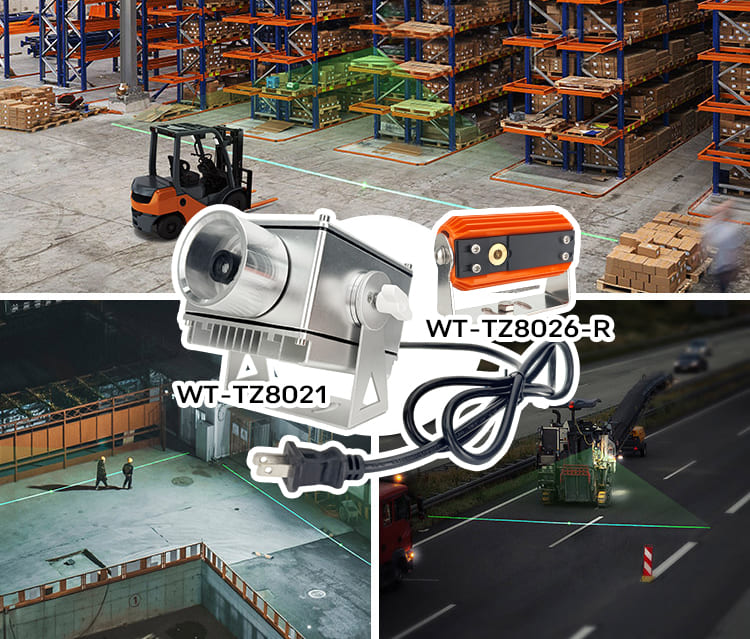
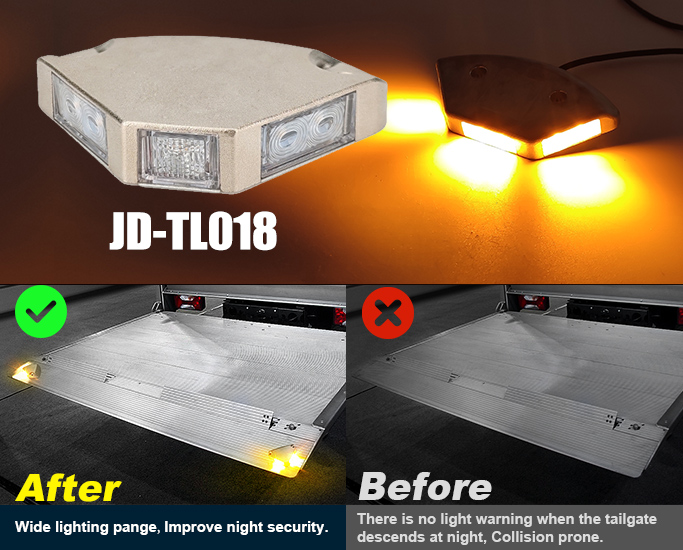
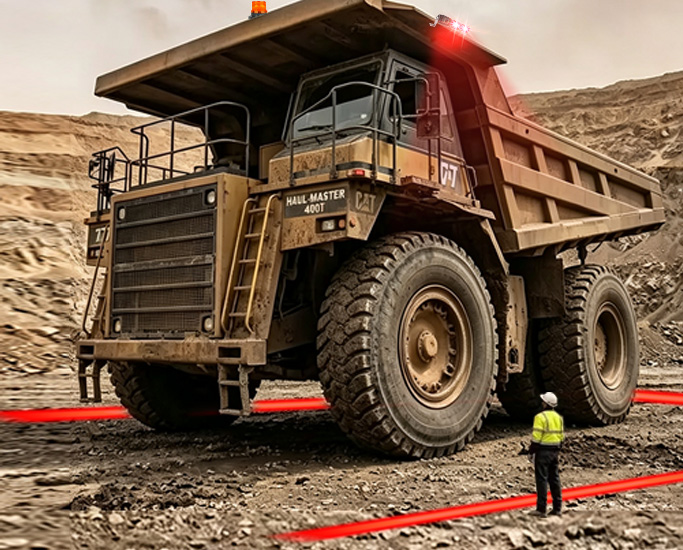
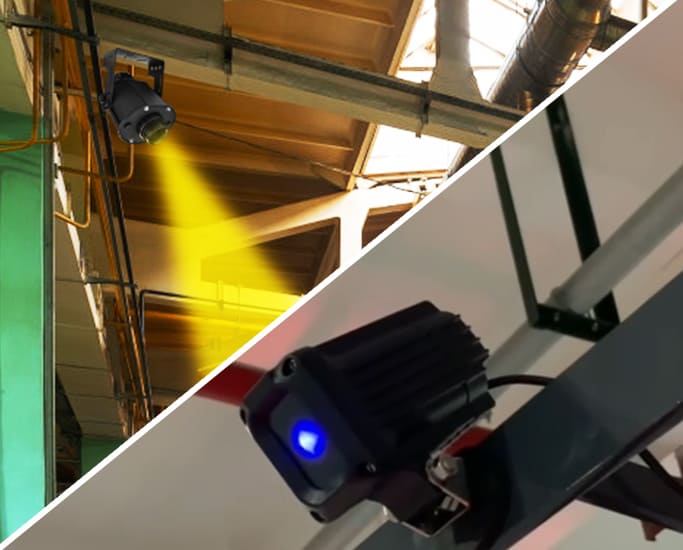
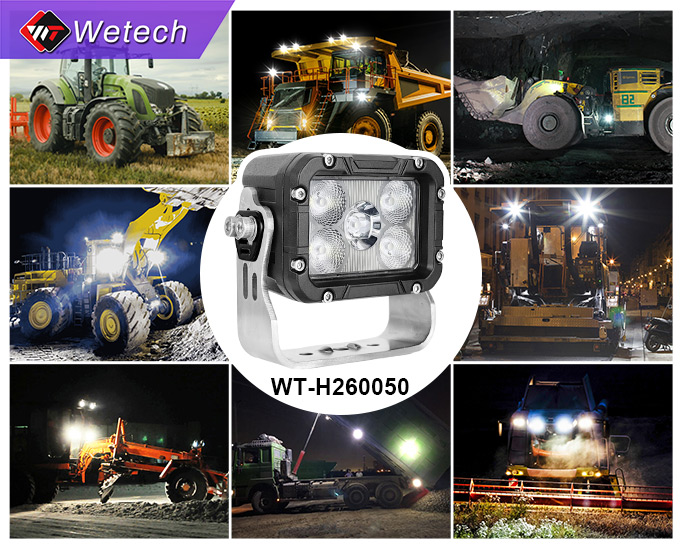
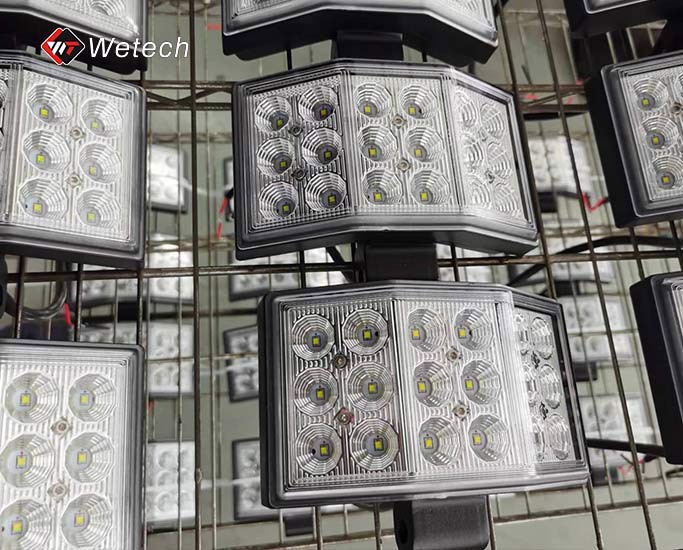
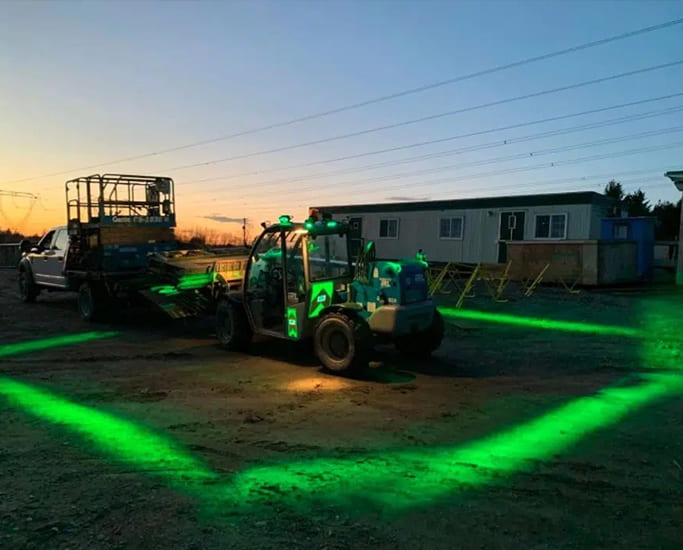
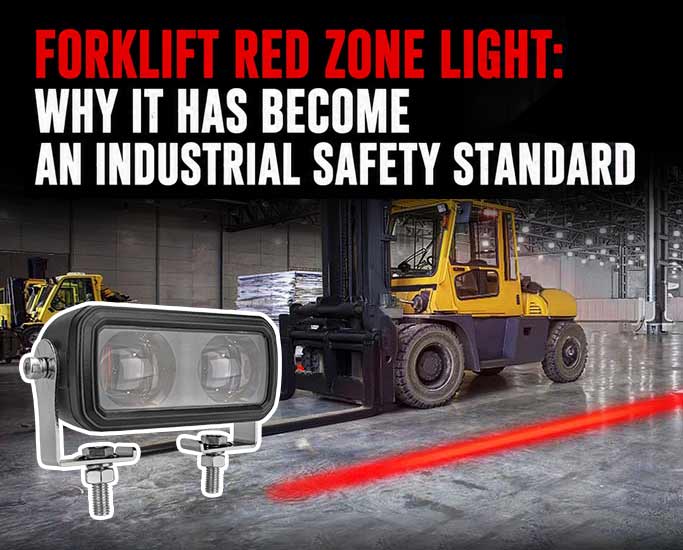
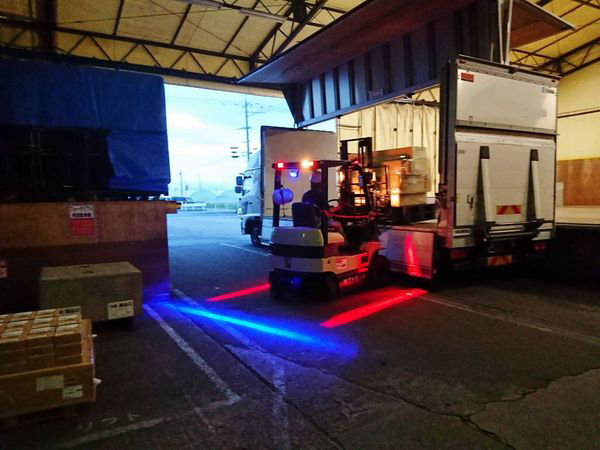
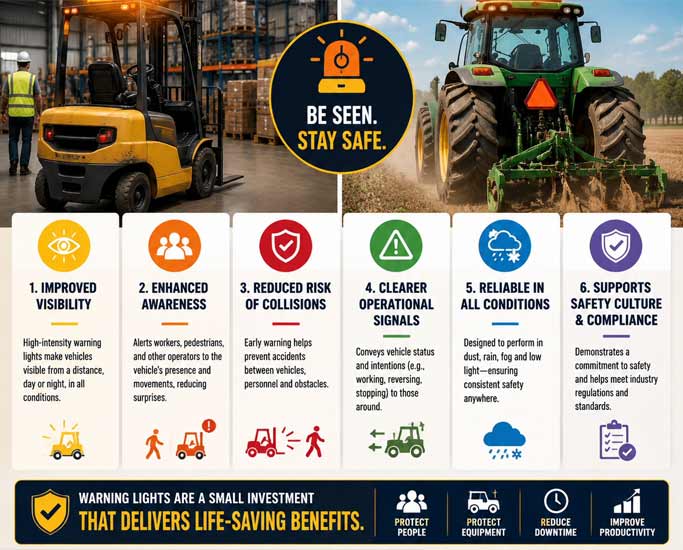
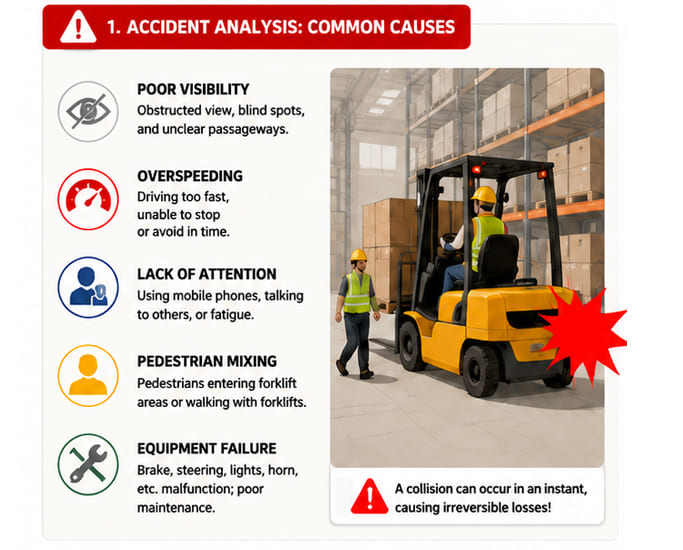
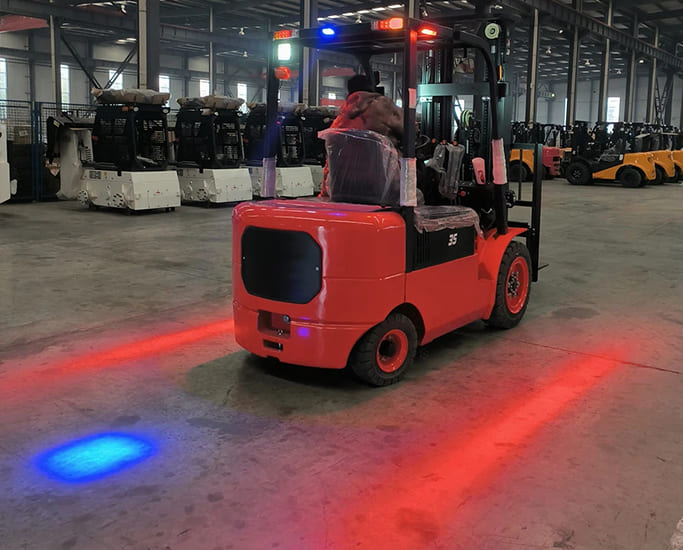



 Network Supported